


What Is the Pekoe Trail?
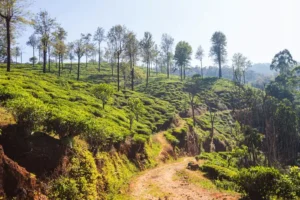
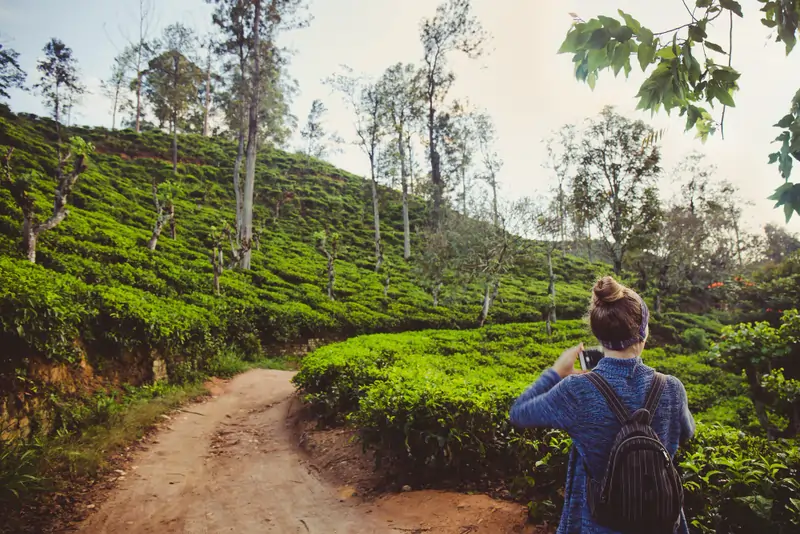
The Pekoe Trail is Sri Lanka’s first official long-distance walking route. Stretching approximately 300 kilometres, it runs from Hanthana, just outside Kandy, through the heart of the central highlands of Sri Lanka, and ends at the Pedro Tea Estate near Nuwara Eliya.
The trail was developed under the Serendipity Trails initiative, supported by significant EU and US development funding, and its first sections officially opened in 2021. The ambition behind it was straightforward but bold: build a world-class walking experience that connects travellers with Sri Lanka’s tea culture, highland communities, and some of South Asia’s most striking mountain landscapes.
Across 22 stages, each averaging around 12 kilometres, the Pekoe Trail passes through some of Sri Lanka’s most celebrated hill towns: Kandy, Hatton, Haputale, Ella, and Nuwara Eliya. But it also takes you to corners of the central highlands of Sri Lanka that most visitors on a standard group tour will never reach: quiet villages, hidden waterfalls, misty ridge paths, and tea factory workers who are genuinely pleased to share a cup with a curious traveller.
At its highest, the trail climbs above 2,100 metres. The Horton Plains section is the most dramatic, but even the gentler stages deliver a quality of experience that’s hard to replicate anywhere else in the country.
The 22 Stages: A Region-by-Region Breakdown
One of the most persistent misconceptions about the Pekoe Trail is that you need to walk all 22 stages. You don’t. The trail is deliberately designed to be tackled in sections, and most visitors, including Australians on a two-week Sri Lanka holiday, choose between three and six stages, shaped by fitness level, available time, and the kind of experience they’re chasing.
Stages 1 to 5: Kandy to Hatton
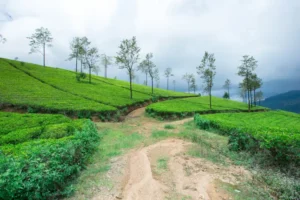
The opening chapter of the Pekoe Trail eases you in gently. You leave Kandy’s humidity behind and climb into the first of the great tea estates of the central highlands of Sri Lanka. The air changes almost immediately. The scent shifts from city traffic to something far greener: eucalyptus, fresh-cut grass, and the faint sweetness of cardamom. Pepper vines trail along the fencelines. The Mahaweli River valley opens up below you as you gain height.
These early stages are the most accessible for moderately fit walkers and carry some of the trail’s most rewarding community interactions. Small homestays, roadside tea stalls, and the occasional wandering elephant herd all feature somewhere along the way.
Stages 6 to 10: Hatton to Haputale
The Pekoe Trail gets more serious through this stretch. Elevation climbs, the terrain becomes considerably more varied, and the landscapes start delivering the kind of views that end up framed on your wall. The foothills of Pidurutalagala, Sri Lanka’s highest peak at 2,524 metres, loom to the north. Tea estates carpet every slope in vivid, almost unreal green, and on clear mornings, the views stretch for what genuinely feels like forever. This middle section of the central highlands of Sri Lanka is where serious hikers tend to fall completely in love with the trail.
The combination of physical challenge, raw scenery, and authentic remoteness is hard to match anywhere in South Asia. Very few people walking these stages feel like tourists. They feel like travellers.
Stages 11 to 16: Haputale to the World’s End Plateau
This is the section most Australians ask about first, and the enthusiasm is entirely justified. The Pekoe Trail through this stretch passes Lipton’s Seat, one of the finest viewpoints in the entire country, drops visitors into the World’s End cliff face at Horton Plains National Park, and winds past the iconic Nine Arches Bridge just outside Ella.
If you have room for only one section in your itinerary, this is it. The scenery is extraordinary, the walking varies beautifully between open ridgelines and dense forest, and the cultural richness of the central highlands of Sri Lanka reaches its peak here. Stage 13, which passes through some of the region’s oldest estates, has a quality that feels almost cinematic, particularly in the late afternoon light.
Stages 17 to 22: Into Nuwara Eliya
The final stretch of the Pekoe Trail delivers a cooler, more English-feeling landscape, which is exactly what Nuwara Eliya has always been known for. The town sits at over 1,800 metres and has long been called Little England by travellers who’ve wandered its colonial-era streets, rose gardens, and golf courses. The trail ends at the Pedro Tea Estate, and there is something genuinely satisfying about finishing a multi-day walk with a factory tour and a proper cup of fresh Ceylon tea in hand.
What No One Tells You: The Honest Bits
Every travel site will tell you the Pekoe Trail is beautiful. It is. But there are a few things worth knowing that don’t always make it into the glossy write-ups, things that make a real difference to whether your experience goes smoothly or not.
The Leeches Are a Real Consideration
During and after rain, leeches are a genuine feature of the central highlands of Sri Lanka. They’re harmless but unpleasant, and if you’re walking any stages between November and February, or during May and June, you need proper leech socks or gaiters. Long pants are non-negotiable. It’s not a deal-breaker by any stretch, but catching a leech attached to your ankle mid-walk is exactly the kind of surprise your travel agent probably forgot to mention.
The Weather Can Turn in Under 20 Minutes
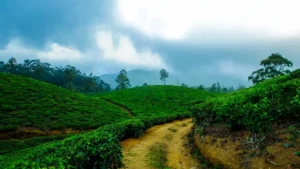
The highlands operate in a microclimate that follows its own rules. A morning of clear skies and razor-sharp views can shift to low cloud, mist, and drizzle before you’ve finished your lunch. This isn’t a reason to avoid the Pekoe Trail. It’s part of what makes the landscape feel so alive and theatrical. But it does mean packing a lightweight waterproof jacket is genuinely non-negotiable, even in the dry season.
Signage Still Has Gaps on Some Stages
The Pekoe Trail is a relatively new formal trail. The first sections only opened in 2021. Signage has improved significantly since launch, but some stretches still rely on local knowledge to navigate correctly. Walking without a guide on the more remote stages is possible for very experienced trekkers, but for most Australian visitors, having a knowledgeable local guide transforms the experience from stressful to extraordinary.
Some Stages Are Harder Than the Profile Suggests
Elevation profiles on a trail map don’t always convey what a climb actually feels like at altitude. Several sections of the Pekoe Trail in the central highlands of Sri Lanka involve sustained ascents of 400 to 600 metres. If you walk regularly at home and have some hill experience, you’ll manage comfortably. But being honest with your tour operator about your fitness level from the start means your itinerary gets shaped around stages that genuinely match what you can enjoy, rather than what you can endure.
Best Time to Walk the Pekoe Trail
The central highlands of Sri Lanka sit within a microclimate that doesn’t always follow the same rhythm as the rest of the country. The best time to walk the Pekoe Trail depends on which sections you’re planning and how important clear skies are to you.
For most Australian visitors, the ideal window falls between January and April. These months deliver the driest conditions on the western slopes of the highlands, reliable morning clarity, and the best chance of those long-view days from exposed ridgelines and lookout points. December and January are particularly crisp around Nuwara Eliya and the Horton Plains sections of the Pekoe Trail. The trade-off is that these are peak season months, so accommodation in the hill towns fills quickly.
May and June bring the southwest monsoon, which drenches the western slopes of the central highlands of Sri Lanka with heavy afternoon rain. Walking is still very much possible, and some travellers love the moody atmosphere, the dramatic waterfalls, and the lush over-saturation that the wet season brings, but going in prepared with the right gear and flexible expectations makes the difference.
July through September is a reasonable window for the eastern stages of the Pekoe Trail, as the northeast slopes tend to stay drier during this period. Experienced walkers who enjoy off-season travel often find this window particularly rewarding, with fewer people on the trail and the highland communities going about their routines undisturbed.
How to Add the Pekoe Trail to Your Sri Lanka Itinerary
This is where working with the right travel partner makes a genuine difference.
The Pekoe Trail isn’t the kind of experience that slots neatly into a pre-packaged group tour. The stages need to be selected based on your fitness level, your timeframe, and what else you’re hoping to do on your trip. The logistics, including getting to trailheads, arranging the right accommodation at the right stopping points, and building in recovery days, are genuinely fiddly if you’re trying to organise everything from Australia.
A private, tailor-made Sri Lanka itinerary allows the Pekoe Trail to sit naturally within a broader journey. You might spend a few days in Kandy exploring the Temple of the Tooth and the Peradeniya Botanical Gardens, walk two or three stages of the trail through the tea country, continue on to Ella for the Nine Arches section, and then ease down to the south coast for a beach finish near Tangalle or Mirissa. That kind of intelligent, unhurried flow is exactly what bespoke travel looks like in practice.
Sesatha Travel specialises in exactly this style of itinerary for Australian travellers. Private touring, no group buses, and an itinerary built around the central highlands of Sri Lanka experiences that match what you actually want, not a generic checklist. You can start the conversation at sesathatravel.com.au.
What to Pack for the Pekoe Trail
Packing for the Pekoe Trail is about balance: being prepared for conditions that can shift quickly without loading yourself up so heavily that the walking becomes miserable.
The essentials for the central highlands of Sri Lanka:
- Lightweight waterproof jacket, non-negotiable regardless of the season
- Leech socks or gaiters for the wetter stages and months
- Sturdy, broken-in trail shoes or hiking boots with solid ankle support
- Sun protection: hat, SPF 50+, and UV-protective sunglasses
- Trekking poles for the steeper descents, particularly Stages 6 to 10
- Electrolyte sachets and a refillable water bottle
- High-energy snacks, as reliable food stops, are not guaranteed on every stage
- A small first-aid kit including blister packs and antiseptic
A note on layering: the central highlands of Sri Lanka can feel genuinely cold at altitude, especially in the early mornings near Nuwara Eliya. A lightweight thermal base layer takes up almost no space in your pack, and you’ll be very glad to have it when you’re standing at 2,000 metres watching the sun come up over the tea estates.
Wildlife and Nature Along the Pekoe Trail
One of the quieter joys of walking the Pekoe Trail is the wildlife you encounter without specifically going looking for it. The central highlands of Sri Lanka support a remarkable range of endemic species, many of which you’re unlikely to spot anywhere else on the island.
Endemic birds, including the Sri Lanka bush warbler, the dull-blue flycatcher, and the Sri Lanka whistling thrush, inhabit the montane forest zones the trail passes through. Sambar deer move through the clearings in the late afternoon light. Purple-faced langurs swing between the canopy edges in the denser forested sections. If you’re particularly lucky and quiet, a fishing cat might cross your path near one of the highland streams.
Australian birders, in particular, tend to find the Pekoe Trail extraordinary. The highland forests along the route are among the very best places in the country to tick off Sri Lanka’s endemic bird species without ever getting into a jeep. Add in the butterflies, the dragonflies over the wetlands, and the constant visual drama of the landscape itself, and the walking becomes as much about observation as it is about distance covered.
Staying Near the Pekoe Trail: What to Expect
Accommodation options along the Pekoe Trail have expanded significantly since the trail’s official launch, and the range now covers almost every type of traveller.
Community homestays and small family guesthouses remain the most authentic option along the central stages. These are places where dinner is cooked on a wood fire, the rice and curry is genuinely extraordinary, and your host family will quite likely become one of your favourite memories from the entire trip.
For Australian travellers who prefer a certain level of comfort after a long day on the trail, there are thoughtfully restored colonial-era bungalows and boutique properties at key points along the Pekoe Trail that offer a genuinely luxurious contrast to the walking itself. In Ella, a handful of hillside lodges deliver views over the tea country that are almost unfair. Around Haputale, several small properties sit at exactly the right elevation to catch the morning mist rolling in from the valleys below.
The right accommodation choice along the Pekoe Trail can turn a challenging walking holiday into something that feels genuinely indulgent. A private tour operator who knows the trail well will know which properties sit at exactly the right points along the route, and which ones to skip.
Why the Pekoe Trail Matters Beyond the Scenery
The Pekoe Trail is not just a walk. It’s a living portrait of a way of life that has shaped Sri Lanka for over 150 years.
Tea defines the central highlands in ways that go far beyond agriculture. It’s why these towns were built in the first place. It’s why the railways run where they do. It’s why the communities you meet along the trail carry a particular mix of cultures and histories: Sinhalese, Tamil, and the descendants of the estate workers brought from southern India by British planters in the 19th century, all living side by side in the highlands they’ve called home for generations.
Walking through all of it at ground level, at 12 kilometres a day, gives you a kind of understanding that you simply can’t get from a vehicle. You don’t just see Sri Lanka. You start to feel how it connects.
Ready to Walk the Pekoe Trail? Start Planning Your Sri Lanka Tour
The Pekoe Trail is one of those experiences that genuinely rewards the people who approach it properly. Getting the stages right, the logistics sorted, and the accommodation matched to what you actually want makes all the difference between a trip you’ll always remember and one that felt like hard work from start to finish.
Sesatha Travel is an Australian travel agency specialising in private, tailor-made Sri Lanka tours. Every itinerary is built from scratch. Every tour runs privately, with no group buses or shared schedules. Whether you want two stages of the Pekoe Trail folded into a two-week coastal and highlands holiday, or a deeper multi-week immersion through the central highlands of Sri Lanka, the Sesatha team builds it around you.