



Secret 1: Sinharaja Rain Forest Is Not a Single Trail
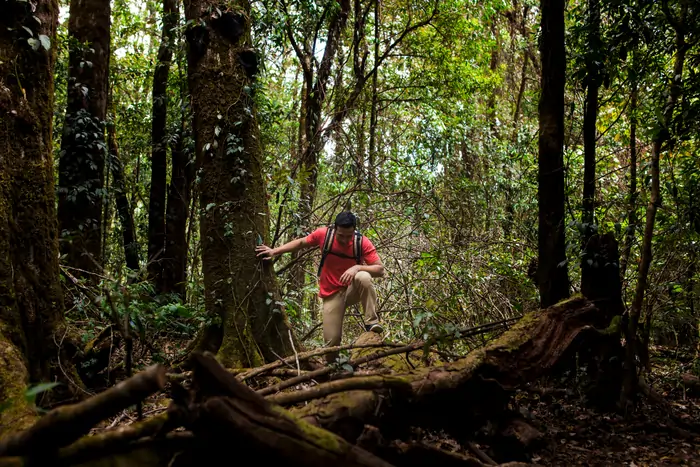
Most visitors who book a quick Sinharaja rain forest day visit walk the same main path from the Kudawa entrance and call it done. And yes, it’s beautiful. But here’s what they don’t know: there are multiple entry points, including Pitadeniya, Morningside, and Beverley Estate, each opening into a completely different section of the forest.
The Morningside sector, in particular, is one of the least visited parts of the reserve. Towering canopy, almost no other tourists, and bird sightings that would make any wildlife enthusiast stop mid-sentence. It’s where serious birders come on their forest tours, seeking solitude alongside the spectacle.
If your Sri Lanka itinerary only pencils in one entry point, you’re seeing a fraction of what the Sinharaja rain forest actually is. A tailor-made tour that plans multiple entry routes across two days is a completely different experience.
Secret 2: The Bird Waves Are a Natural Wonder Most Miss Entirely
Sinharaja rain forest is famous among ornithologists for a rare phenomenon called mixed-species bird waves. Dozens of bird species, sometimes 30 or more, travel through the forest together in a loose, coordinated flock. One minute, the forest is quiet. Then suddenly, the trees around you are alive with motion and sound, a kaleidoscope of endemic Sri Lankan birds moving through in formation.
You might see Sri Lanka Blue Magpies, Green-billed Coucals, Crested Drongos, Malabar Trogons, and several species of babbler all passing through within minutes of each other. It happens fast, and it doesn’t repeat itself on demand. The key to catching a bird wave is being in the right section of the forest at the right time of day, which only an experienced guide who runs forest tours here regularly will know.
Chasing these waves on a generic group tour with a fixed schedule is nearly impossible. On a private Sinharaja rain forest tour, your guide can position you correctly and wait. That’s the difference between glimpsing something extraordinary and actually witnessing it.
Secret 3: Sinharaja Rain Forest Has a Canopy Layer Most Tourists Never Reach
Walk the main Sinharaja rain forest trail, and you’re moving through the forest floor and understorey. But above you, sometimes 40 metres overhead, there’s an entire world operating independently. Giant canopy trees, many of them endemic to Sri Lanka, create a closed roof that keeps the forest floor cool, dark, and humid year-round.
Some of these trees, including Dipterocarpus zeylanicus and Mesua ferrea, can live for several hundred years. The canopy also hosts species that rarely descend to ground level, including certain gecko species, purple-faced langurs moving branch to branch, and a remarkable variety of epiphytic plants growing directly on the bark and limbs above.
A knowledgeable guide on your Sinharaja rain forest tour will stop frequently to look up, point out movement above, and explain the ecological relationships happening in the canopy in real time. Without that context, most visitors walk straight past it.
What to Look for in the Canopy During Forest Tours
- Purple-faced langur monkeys moving through the upper branches
- Giant squirrels, often heard before they’re seen
- Flowering canopy trees in season, particularly between January and April
- Endemic bird species that nest and feed exclusively at height
Secret 4: The Best Time to Enter Sinharaja Rain Forest Is Before 7 am
Here’s something most tourist-facing Sinharaja rain forest guides won’t tell you upfront: timing is everything. The first two hours after sunrise are when the forest is at its most active. Birds are feeding, animals are moving, and the light filtering through the canopy turns the whole place golden and impossibly photogenic.
By mid-morning, the forest is quiet. Wildlife retreats to the shade, the humidity builds, and the trail fills with day-trippers arriving from nearby towns. The experience at 10 am is measurably different from the experience at 6 am.
Most group-tour operators can’t accommodate early starts because logistics don’t allow it. Staying overnight near Sinharaja, which is genuinely possible in some beautiful jungle lodges just outside the reserve, solves the problem entirely. On a private Sinharaja rain forest tour through Sesatha Travel, early morning forest tours can be built directly into your bespoke itinerary.
Secret 5: Sinharaja Rain Forest Is Home to Over 60% of Sri Lanka’s Endemic Species
People talk about the Sinharaja rain forest as a biodiversity hotspot, but that phrase doesn’t really convey the scale of what’s happening here. More than 60 per cent of Sri Lanka’s endemic bird species live inside or regularly visit this forest. More than half of the country’s endemic mammals have been recorded here. The rate of plant endemism is staggering, with hundreds of species found nowhere else on earth.
For Australian travellers, this matters. We’re used to extraordinary biodiversity at home, particularly across Queensland and the Northern Territory. Sinharaja rain forest offers that same sense of ecological richness, but with a completely different cast of species. Nothing here looks familiar, and that’s the point.
Some highlights to watch for during forest tours inside the reserve include the Sri Lanka Junglefowl (the national bird), green pit vipers coiled in low branches, Sri Lankan land monitors moving silently along the trail, and the extraordinary biodiversity of amphibians, many of which are only active after rain.
Endemic Wildlife Checklist for Your Sinharaja Rain Forest Visit
- Sri Lanka Blue Magpie (the most photographed bird in the forest)
- Serendib Scops Owl (one of the rarest owls in Asia, discovered as recently as 2001)
- Sri Lanka Leopard (rarely seen but present in remote zones)
- Purple-faced Langur
- Sri Lanka Spiny Mouse
- Multiple endemic gecko and skink species
Secret 6: The Villages on the Edge of Sinharaja Rain Forest Tell Their Own Story
The communities living on the boundary of the Sinharaja rain forest have coexisted with this ecosystem for generations. They know it in ways that no textbook can copy. Families in villages like Kudawa, Weddagala, and Deniyaya have livelihoods that depend on the forest’s health, from collecting cardamom and cinnamon to guiding visitors along trails their grandparents walked before them.
Visiting a border village before or after your Sinharaja rain forest walk adds layers of meaning that most forest tours simply don’t include. Sitting with a local family over a cup of kithul treacle, or watching a craftsperson work with forest materials, changes the experience from nature tourism into something genuinely cultural.
This is the kind of experience that Sesatha Travel builds into private Sri Lanka tours as a matter of course. Community connections aren’t an afterthought on a bespoke itinerary. They’re part of what makes the trip worth taking.
Secret 7: Sinharaja Rain Forest Rewards Return Visits More Than Almost Any Other Destination
Most natural attractions are at their best on the first visit. You see the thing, you photograph the thing, you move on. Sinharaja rain forest is different. Each visit reveals something new, because the forest itself changes constantly. Wet season and dry season produce completely different ecosystems. Different bird species are active in different months. Plant blooming cycles shift. Amphibians come out after rain in numbers that simply aren’t present in dry conditions.
Travellers who have visited Sinharaja rain forest more than once almost universally say the second visit was richer than the first, because they knew what to look for and arrived with better questions. If you’re planning a longer Sri Lanka trip of 10 days or more from Australia, consider building in two separate Sinharaja rain forest experiences: one in the south zone near Kudawa and one in the north near Morningside. The contrast is striking.
Your private forest tour guide will help you understand what the forest is doing on the day you’re there. That real-time expertise is irreplaceable.
Practical Tips for Visiting Sinharaja Rain Forest from Australia
If you’re organising your Sri Lanka trip from Australia, here’s what you need to know before you go.
Getting There
Sinharaja rainforest is located in the Sabaragamuwa and Southern Provinces, roughly a four- to five-hour drive from Colombo. The closest town is Deniyaya. On a private tour, your driver will manage all transfers and know the best approach road depending on which entry point you’re using.
When to Go
The forest receives rain year-round, which is part of what makes it a rainforest. The driest periods are generally January to early April and August. That said, rain in the forest is not always a negative. Post-rain forest tours often produce the best amphibian and insect sightings of any visit. Pack a light rain jacket regardless of the month.
What to Wear and Bring
- Long-sleeved light clothing (leeches are present, and long sleeves help)
- Closed shoes or boots, preferably waterproof
- Binoculars if you’re serious about birdwatching
- Insect repellent
- Water and light snacks (no food vendors inside)
- A camera or a phone with a good zoom lens
Permits and Entry
Entry to Sinharaja rain forest requires a permit from the Department of Forest Conservation. All visitors must be accompanied by a registered local guide. On a private tour, this is handled for you in advance. No paperwork, no queuing at the gate, no surprises on arrival.
How to Combine Sinharaja Rain Forest with the Rest of Your Sri Lanka Trip
Sinharaja rain forest sits in the south-west of the island, which puts it within practical reach of several other major destinations. A well-planned private tour can fold Sinharaja into a broader itinerary without adding unnecessary travel time.
Sinharaja – Ella – Yala
A popular circuit for nature-focused travellers. Sinharaja rain forest covers the deep jungle experience, Ella delivers the tea country highland scenery and train journey, and Yala National Park rounds out the wildlife with its famous leopard sightings. Three very different ecosystems, all within one cohesive southern loop. Forest tours in each location reveal completely different wildlife.
Sinharaja – Galle – Tangalle
This pairing suits travellers who want contrast. Spend two days immersed in Sinharaja rain forest, then drive south to Galle Fort for colonial heritage and great food, and finish with a few days of beach time in Tangalle. The shift from cool, dark forest to warm coastline is genuinely refreshing. It also works beautifully as a honeymoon or couple’s itinerary.
Sinharaja – Cultural Triangle
For those who want the complete Sri Lanka experience, build your itinerary from the cultural heartland in the north, through Kandy and the hill country, down into the south via Sinharaja rain forest. It’s a longer trip, typically 14 days or more, but it covers everything the island does best. Private forest tours along the way mean you never feel rushed.
Why Private Forest Tours Make All the Difference in Sinharaja
Sinharaja rain forest is not a destination you can rush. It rewards patience, silence, and the ability to stop whenever something interesting appears. That’s almost impossible to achieve on a group tour with a fixed schedule and 15 other people.
On a private Sinharaja rain forest tour, your guide walks at your pace. If a rare bird appears, you stop. If you want to photograph a gecko for ten minutes, nobody’s waiting. If you’d rather spend the morning at Morningside instead of Kudawa because conditions look better, that decision gets made on the day.
Sesatha Travel builds all Sri Lanka tours as private, bespoke experiences. No group buses. No fixed departure times. No compromise on the moments that matter. Your forest tour experience is yours, designed around your interests, your pace, and your travel dates.
With a 15 per cent deposit to confirm your booking and full flexibility to tailor the itinerary before you travel, starting your Sri Lanka trip planning from Australia is straightforward. Founder Shehan, who grew up in Sri Lanka and has guided travellers through Sinharaja rain forest for years, personally oversees every itinerary Sesatha puts together.
Ready to Explore Sinharaja Rain Forest? Let’s Plan Your Private Sri Lanka Tour
Sinharaja rain forest is genuinely one of those places that exceeds expectations. Not in a hyped, over-Instagrammed way, but quietly, at 6 am, when a bird wave moves through the trees above you, and everything else falls away.
It’s the kind of travel memory that stays. The kind that makes you wish you’d allocated more time, stayed another night, gone deeper.
At Sesatha Travel, every Sri Lanka tour we build is private, tailor-made, and designed around what actually matters to the people travelling. If Sinharaja rain forest is on your radar and you’re not sure how to fit it into a broader itinerary, we’d love to help. Our forest tours expertise and personal knowledge of the region mean we can put together something that works for your timeline, your interests, and your travel style.
Get in touch today for a free custom itinerary consultation. Talk to our Sri Lanka travel expert and start planning the trip that actually does the country justice.