



What Does Sri Lanka Public Transport Actually Look Like?
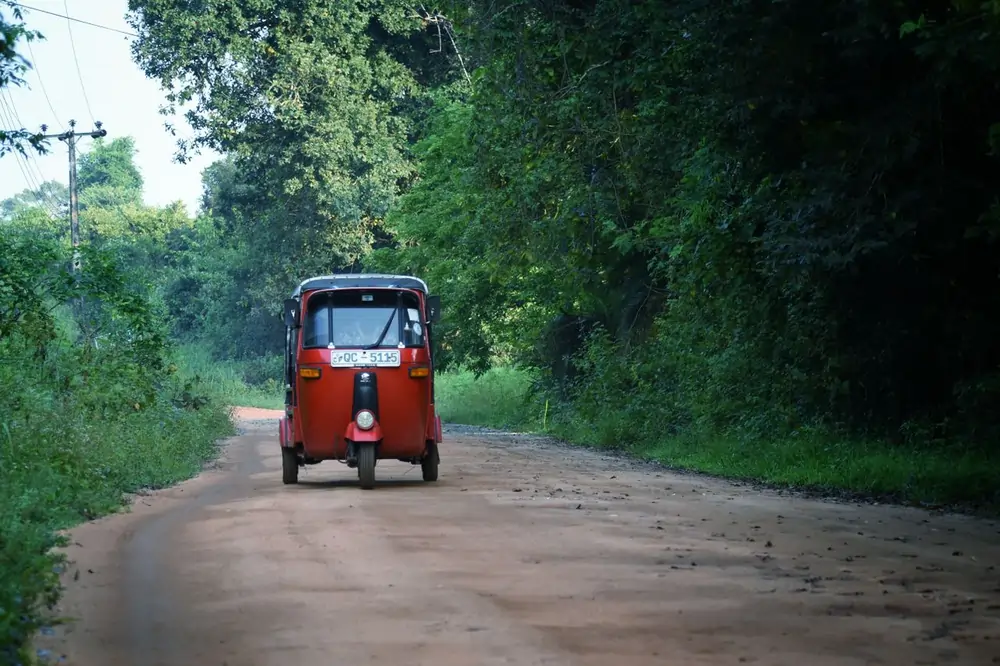
If you’ve never been to South Asia before, Sri Lanka public transport can come as a bit of a shock. It’s colourful, crowded, occasionally chaotic, and utterly unlike anything you’ll find back home. Buses roar past with painted dashboards and blaring horns. Trains trundle along at a pace that feels almost deliberately unhurried. And tuk-tuks, known locally as three-wheelers, dart between all of it like caffeinated wasps.
The core of Sri Lanka public transport is built around three main options: an extensive rail network, an even more extensive bus network, and the ever-present tuk-tuk for shorter hops. There’s no real subway or tram system to speak of outside Colombo, so most travellers end up mixing and matching depending on the leg of their journey.
What surprises a lot of Australians is just how cheap getting around the island actually is. A long train journey might cost a few dollars. A tuk-tuk ride across town rarely breaks the equivalent of five or six Australian dollars. It’s part of what makes independent travel here so appealing, even if the comfort levels don’t always match the price tag.
Is Sri Lanka Public Transport Safe for Australian Travellers?
This is the question we get asked more than almost any other. The honest answer is that Sri Lanka public transport is generally safe in terms of crime, but it comes with real physical risks that are worth taking seriously. Overcrowded buses, drivers who treat road rules as loose suggestions, and trains with open doors all mean you need to stay alert.
Pickpocketing does happen on crowded buses and trains, particularly around Colombo and Kandy, so keeping your bag zipped and close is just common sense. Beyond that, most travellers report feeling perfectly safe getting around this way, with locals often going out of their way to help confused-looking tourists find the right platform or bus stop.
Where things get trickier is road safety. Sri Lanka has a higher road accident rate than Australia, and that applies whether you’re in a bus, a tuk-tuk, or a private car. This is a big part of why so many of our clients ultimately choose a private driver over navigating Sri Lanka public transport solo, particularly for longer journeys between regions.
For up-to-date safety advice specific to Sri Lanka, it’s worth checking the Australian Government’s Smart Traveller website before you finalise your itinerary.
Sri Lanka Public Transport Options Explained
Trains: Slow, Scenic and Genuinely Unmissable
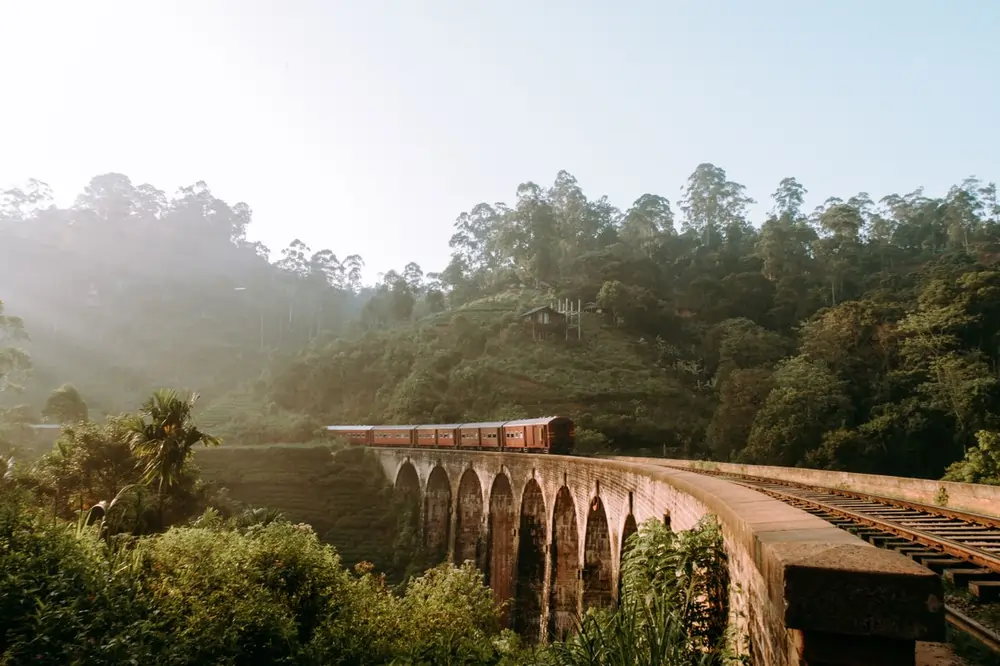
If there’s one part of Sri Lanka public transport that’s actually become a tourist attraction in its own right, it’s the train network. The route from Kandy to Ella is regularly ranked among the most scenic train journeys on earth, winding through tea plantations, misty hills and tiny stations that look frozen in time.
Trains are cheap, and reserved seats in first or second class can usually be booked in advance, though popular routes sell out weeks ahead in peak season. Unreserved third class is an adventure of its own, standing room only, doors open, wind in your hair, and not for the faint-hearted.
Buses: Cheap, Frequent, Not for the Faint-Hearted
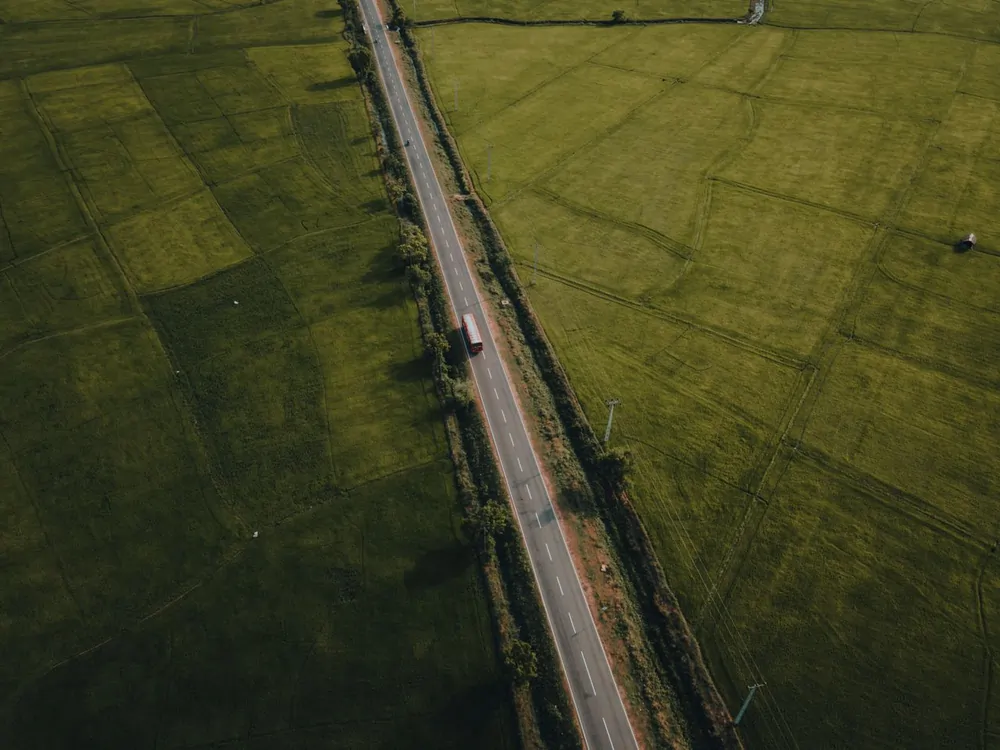
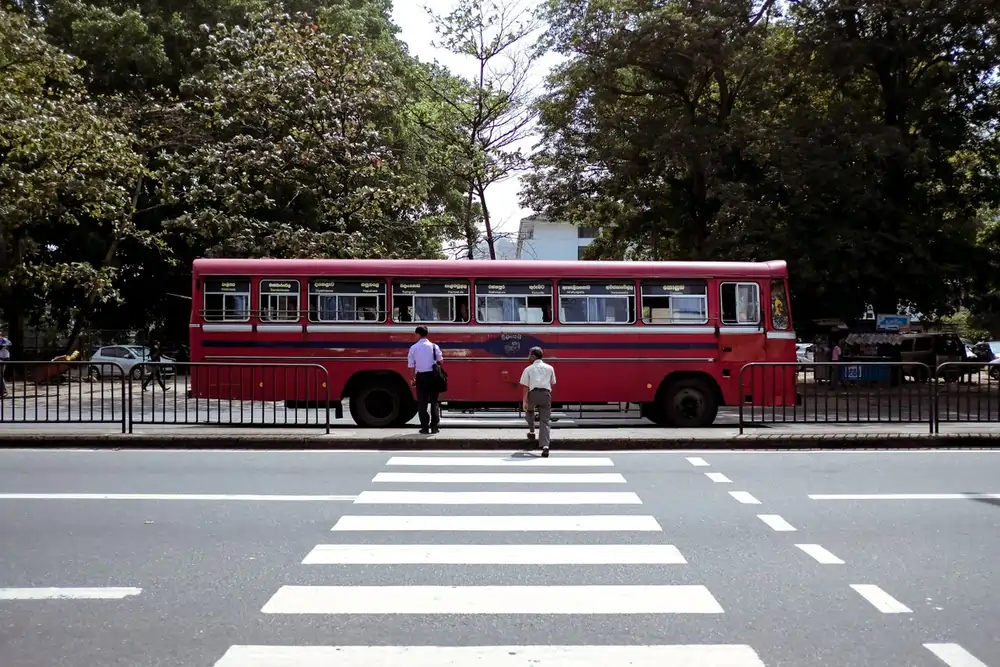
Buses are the backbone of Sri Lanka public transport, reaching almost every corner of the island, often at breakneck speed. They’re incredibly cheap and surprisingly frequent, but comfort is not really part of the package. Expect tight seating, loud music, and drivers who overtake on blind corners with a confidence that can be genuinely alarming.
For short hops between nearby towns, buses can be a fun, authentic way to travel. For longer journeys, most Australians find the novelty wears off fast.
Tuk-Tuks: The Iconic Three-Wheeler
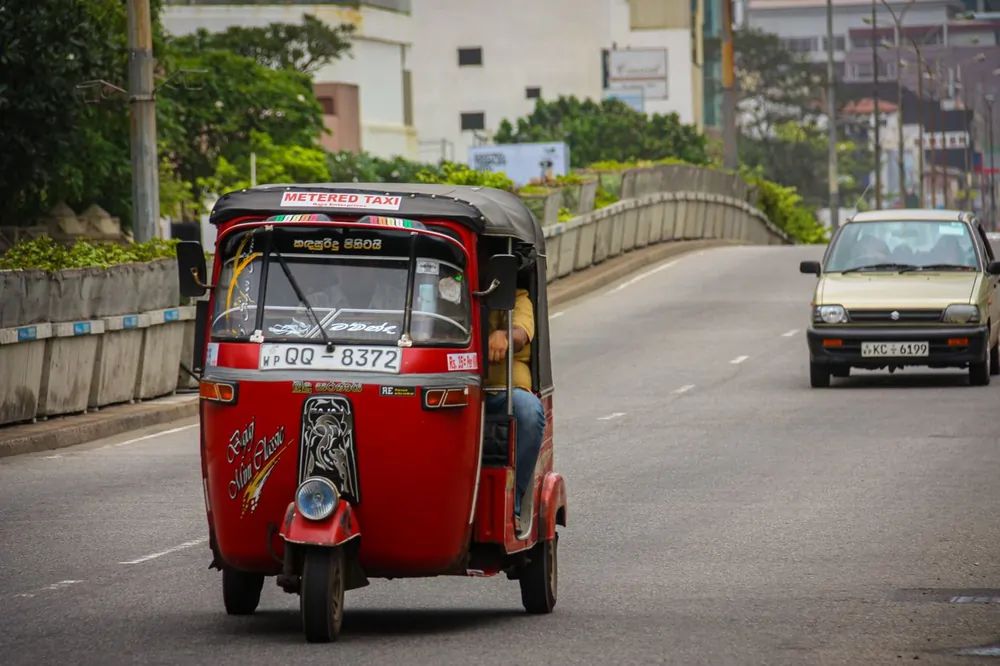
No conversation about getting around the island is complete without tuk-tuks. These little three-wheeled vehicles are everywhere, cheap, and perfect for short trips around town. Always agree on a price before you get in, or ask the driver to use the meter if the vehicle has one, since haggling is very much expected.
Taxis and Ride-Hailing Apps
Apps like PickMe operate much like Uber and are a genuinely handy, reliable option in bigger cities like Colombo, Kandy and Galle. They take a lot of the guesswork and haggling out of getting around, and pricing is upfront before you even book the ride.
Renting a Tuk Tuk in Sri Lanka: What You Need to Know
Here’s where things get interesting for the more adventurous traveller. Renting a tuk tuk in Sri Lanka has become a genuinely popular way for backpackers and independent travellers to explore the island at their own pace, and honestly, it’s a lot of fun if you know what you’re getting into.
Companies in tourist hubs like Ella, Mirissa and Kandy offer short and long-term rentals, often with GPS included and a crash course on driving one before you head off. This kind of rental typically costs somewhere between AUD $15 and $30 per day, depending on the season and how long you’re keeping it.
That said, renting a tuk tuk in Sri Lanka isn’t for everyone. The roads can be genuinely hair-raising, with unpredictable traffic, potholes, and the occasional stray cow wandering across your path. If you’ve never ridden anything with three wheels before, your first attempt probably shouldn’t be on a mountain road in the hill country.
We’ll be upfront: while this sounds like a fantastic adventure, and for some travellers it genuinely is, it’s not something we typically recommend for families, older travellers, or anyone short on time. The learning curve is real, and a minor prang can eat into your holiday fast.
If you do decide renting a tuk-tuk in Sri Lanka is for you, always check the vehicle’s insurance coverage, take photos of any existing damage before you drive off, and wear a helmet even if it’s not strictly required. It’s also worth noting that an International Driving Permit is technically required, though enforcement varies.
For travellers who love the idea of a tuk-tuk experience without the logistics of renting a tuk-tuk in Sri Lanka yourself, we can arrange a guided tuk-tuk tour with a local driver instead, giving you the fun without the risk.
One of our clients, a couple from Melbourne, spent three days behind the wheel of their own tuk-tuk around Mirissa and Weligama last year. They loved the freedom of it, stopping wherever they liked for a coconut or a photo, but admitted the constant horn honking and near misses with buses left them fairly exhausted by day three. It’s a genuinely fun story to tell back home, but it’s not necessarily a relaxing one while you’re living it.
Sri Lanka Public Transport Around the Cultural Triangle and Hill Country
Getting around varies enormously depending on which part of the island you’re exploring. Around Colombo and the west coast, Sri Lanka public transport is relatively dense, with frequent buses and a coastal rail line running right along the water. It’s easy enough to hop between towns like Bentota, Hikkaduwa and Galle without much planning.
Head inland to the cultural triangle around Sigiriya, Polonnaruwa and Anuradhapura, and things thin out considerably. Buses connect the major towns, but the ancient sites themselves are spread out and genuinely need a tuk-tuk, taxi or private driver to see properly in a single day. Public transport alone here can eat up hours you’d rather spend exploring.
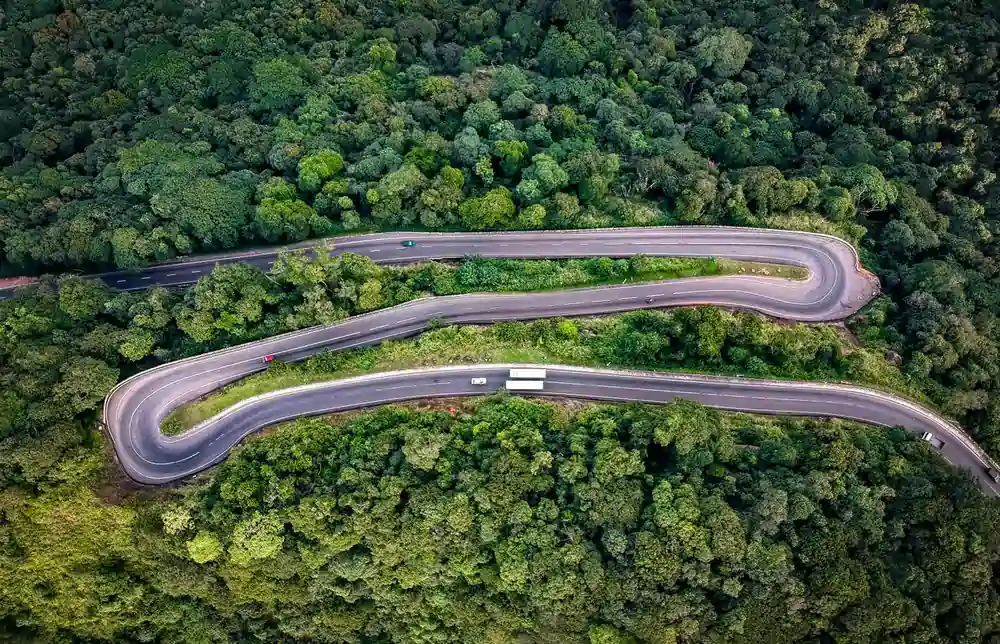
Up in the hill country around Ella, Nuwara Eliya and Kandy, the train becomes the star of the show. Roads twist and climb constantly, and while local buses do make the journey, the scenic rail line is genuinely the better experience. This is also where a lot of travellers decide the idea of doing this themselves sounds appealing, at least until they see how steep and winding those mountain roads actually get.
What to Pack for a Day Using Sri Lanka Public Transport
A little preparation goes a long way. Cash in small denominations is essential, since bus conductors and tuk-tuk drivers rarely have change for larger notes. A light scarf or sarong doubles as sun protection and a modesty cover for temple visits along the way.
Hand sanitiser, a reusable water bottle and a portable phone charger are all worth having on hand, particularly on longer train journeys where the toilets and amenities can be fairly basic. If you’re navigating the island without a local guide, downloading an offline map before you set off is genuinely one of the smartest things you can do, since signal drops out in more remote stretches of the hill country.
Sri Lanka Public Transport Costs: What to Budget
One of the genuine perks of Sri Lanka public transport is just how affordable it is. A cross-country train ticket rarely costs more than a few dollars, even in reserved class. Local buses charge next to nothing, sometimes under a dollar for short trips. Tuk-tuk rides across town typically run between two and eight Australian dollars, depending on distance and your haggling skills.
Compare that to renting a tuk-tuk in Sri Lanka for a multi-day adventure, which sits in the fifteen to thirty dollar a day range, and you can see why budget travellers are drawn to piecing together their own routes using local buses and trains rather than booking private transport for every leg.
That said, cheap doesn’t always mean easy. Time is often the trade-off. A journey that might take ninety minutes by private car can easily stretch to three or four hours by bus once you factor in transfers, waiting times and the occasional breakdown.
Sri Lanka Public Transport vs Private Tours: Pros and Cons
This is genuinely the crux of the decision for most of our clients. Sri Lanka public transport wins hands down on price and on that authentic, in-the-thick-of-it travel experience. There’s something to be said for squeezing onto a local bus and chatting with the person next to you about their family, their village, their opinion on Australian cricket.
But private touring wins comprehensively on comfort, safety and time. With a private driver, you’re not waiting on a platform wondering if your train is running two hours late. You’re not white-knuckling it through a bus overtaking on a blind bend. You go where you want, when you want, with air conditioning and a driver who knows every shortcut.
For travellers with limited time, families with young kids, older parents in the group, or anyone who simply wants their holiday to feel relaxing rather than an endurance test, we’d genuinely steer you away from relying purely on Sri Lanka public transport and towards a private touring option instead.
Sri Lanka Public Transport Near Me: Finding Trustworthy Local Transport
If you’ve searched for “sri lanka public transport near me” or “tuk tuk rental near me”, you’ve probably noticed the results are a mixed bag of local operators, some reliable, some less so. Vetting these yourself from Australia before you’ve even landed is genuinely difficult.
This is exactly the kind of local knowledge a good Australian travel agency should bring to the table. Rather than gambling on random searches once you’ve arrived, jetlagged and disoriented, it pays to sort your transport before you leave home.
At Sesatha Travel, we’re Australian-owned and led by a Sri Lankan-born founder who knows exactly which drivers, operators and routes are trustworthy, and which ones to steer well clear of. That local insight means you’re never left standing on a dusty roadside wondering if your bus is actually coming.
For entry requirements and general travel safety advice before you go, the Smart Traveller website is a solid starting point.
How Sesatha Travel Handles Transport So You Don’t Have To
Every one of our Sri Lanka holiday packages includes private transport as standard. No wrestling with Sri Lanka public transport timetables, no negotiating tuk-tuk fares in the midday heat, no standing room only on a packed bus. Just a private vehicle, a dedicated driver-guide, and a pace that suits you.
If you love the idea of experiencing tuk-tuks without the stress of renting a tuk-tuk in Sri Lanka yourself, we can build that into your itinerary too, arranging a guided tuk-tuk tour through spots like Galle Fort or the backstreets of Kandy with an experienced local driver at the wheel.
Our Sri Lanka Island Explorer and Sri Lanka Odyssey packages both cover long distances across the island, exactly the kind of journeys where Sri Lanka public transport becomes genuinely impractical if you’re short on time. And if none of our set itineraries quite fit, our bespoke tours service will build a private transport plan entirely around your travel dates and destinations.
Tips for Using Sri Lanka Public Transport Safely
If you do decide to tackle Sri Lanka public transport independently, a few habits go a long way. Keep valuables in a zipped, front-facing bag, particularly on crowded buses and trains. Avoid unreserved train carriages during peak commuter hours if you can help it. Always agree on tuk-tuk fares before you climb in, and don’t be afraid to walk away if a price feels off.
If you’re considering renting a tuk-tuk in Sri Lanka, stick to daylight hours until you’re confident with the vehicle, avoid major highways where possible, and never attempt hill country roads at night. Locals are generally warm and helpful, and asking for directions or advice rarely goes unanswered.
Above all, build in more time than you think you’ll need. Local transport runs on its own relaxed schedule, and stressing about delays will only sour what should be a fascinating part of your trip.
A Few Etiquette Tips for Getting Around Like a Local
Small courtesies go a long way here. On buses and trains, offering your seat to elderly passengers or anyone carrying a baby is expected, not optional. Dress modestly if you’re heading to or from a temple, even if you’re mid-journey and just passing through.
Bargaining with tuk-tuk drivers is normal and even a little bit of fun once you get the hang of it, but keep it good-natured rather than aggressive. A smile and a friendly tone go a lot further than a hard bargain. And if a driver or fellow passenger strikes up a conversation, lean into it. Some of our clients’ favourite memories come from a random chat on a delayed train platform rather than anything ticked off a checklist.
Start Planning Your Sri Lanka Tour
At the end of the day, Sri Lanka public transport is part of what makes the island so vivid and alive: colourful buses, iconic trains, and tuk-tuks buzzing down every laneway. Whether you’re keen to experience it firsthand, curious about renting a tuk-tuk in Sri Lanka, or would simply rather sit back with a private driver and let someone else handle the roads, the choice genuinely shapes the feel of your entire trip.
Our team has years of experience helping Australian travellers navigate exactly this decision, matching the right transport mix to the right kind of holiday.
Ready to sort your transport before you land? Talk to a Sri Lanka expert today, or get your custom itinerary started, and let’s turn your dream trip into a confirmed booking.