



1. Colombo: Where Sri Lankan Foods Hit Their Most Electrifying Stride
Most visitors move through Colombo quickly, which is a mistake. The capital is messy, loud, and not particularly photogenic in the traditional sense. But for food enthusiasts? It is essential.
The Kottu Roti Experience
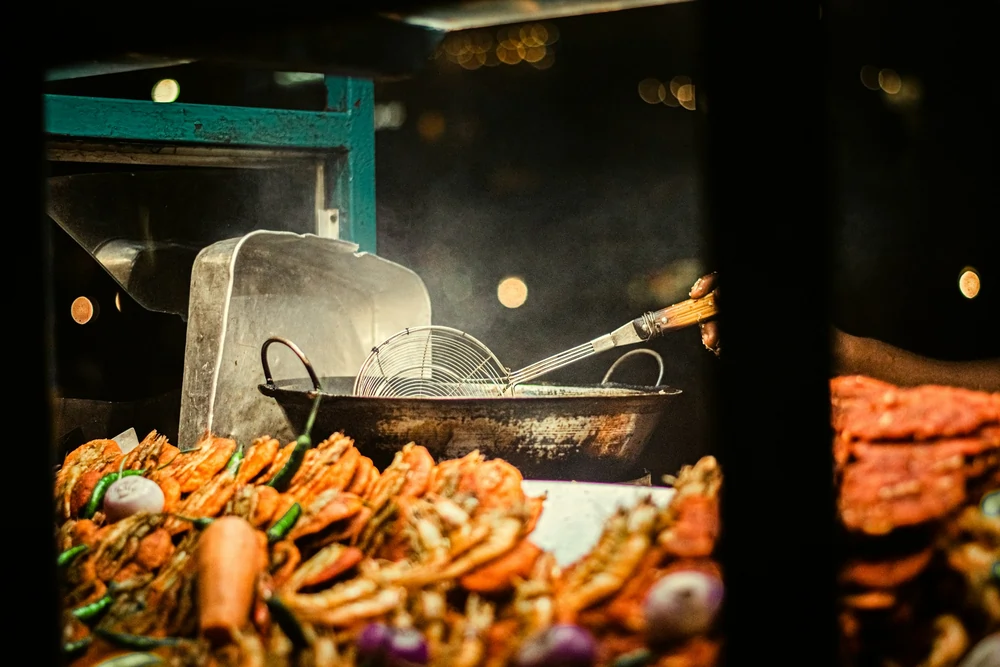
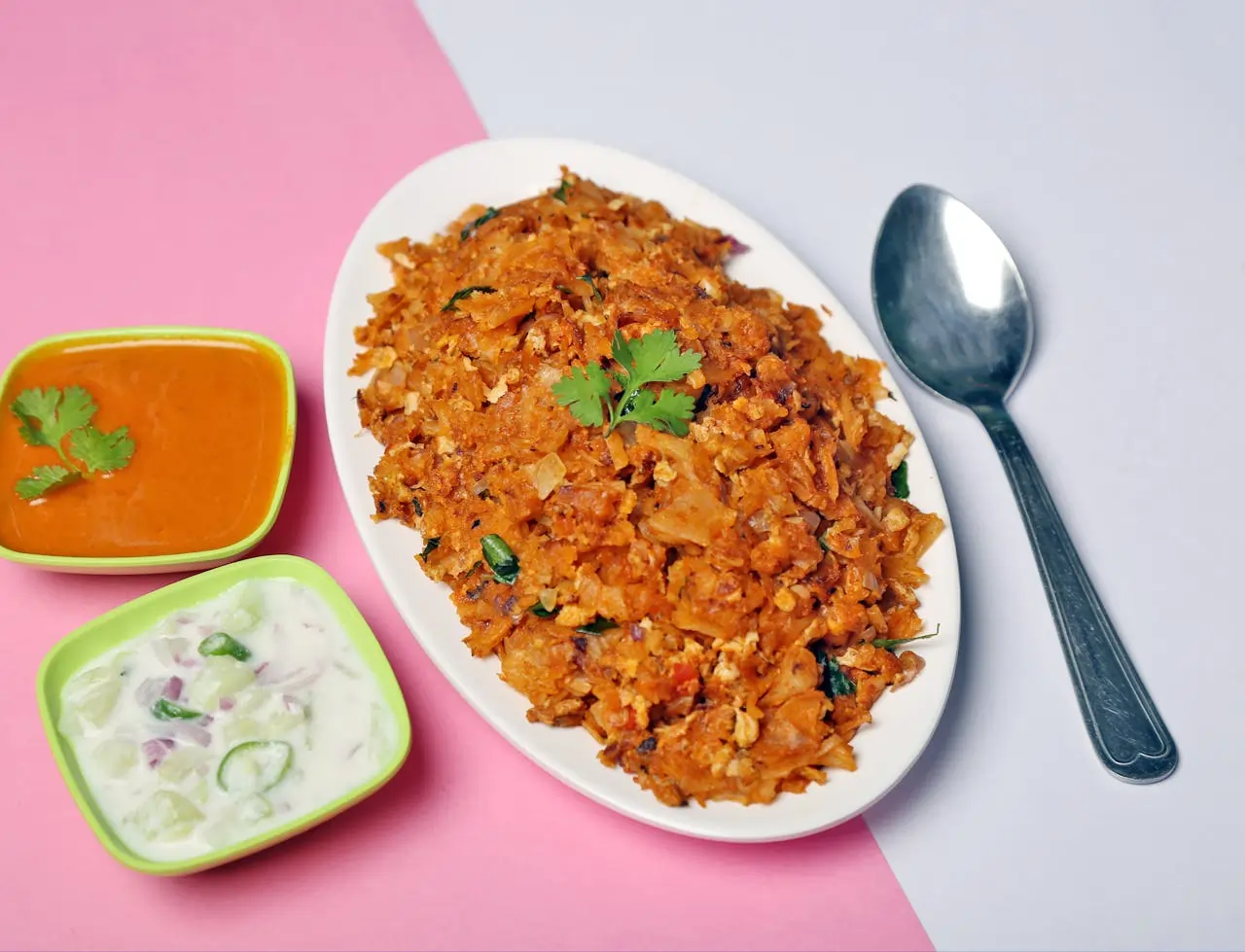
You can find kottu roti across the island, but Colombo’s version is the benchmark. It’s street food at its most confident. Leftover roti bread gets chopped and tossed on a flat iron griddle with egg, vegetables, curry, and sometimes cheese or meat. The cook works with two metal blades, chopping and folding in a rhythm that locals find so familiar they barely look up. You’ll want to stop and watch for about 5 minutes.
The Pettah neighbourhood is particularly rewarding for street food. It’s loud, crowded, and the food is excellent. Sri Lankan foods eaten here feel completely authentic, stripped of any tourist gloss. If you’re travelling on a private tour, ask your guide to take you to Pettah after dark when the kottu carts really get moving.
Rice and Curry: The National Dish
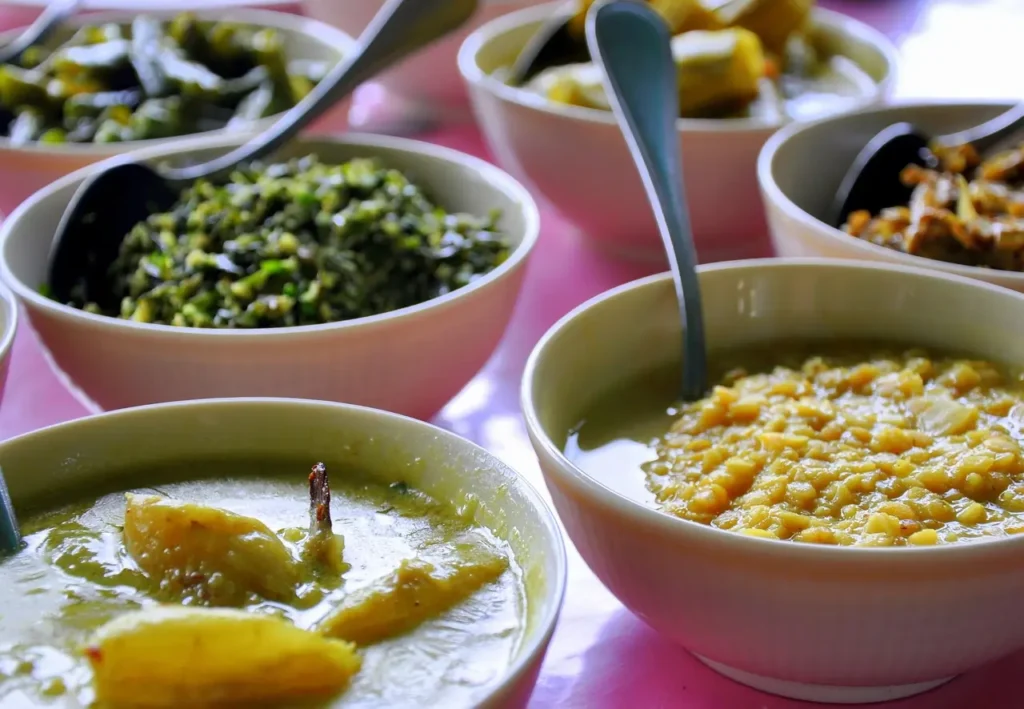
Sri Lanka’s most foundational meal is simple in explanation. A mound of rice, surrounded by small curry portions. Each one a different curry, a different temperature, a different level of heat. There are many, including dhal, fish curry, pumpkin, pol sambol (fresh coconut relish), papadam, and mallum (a finely chopped green leaf dish). It sounds modest until it arrives at the table and you’re faced with the arithmetic of deciding what to eat first.
In Colombo, you’ll encounter rice and curry everywhere from government canteens to upscale restaurants in Colombo 7. For food enthusiasts, the journey from a local canteen to a heritage restaurant serving the same dish at opposite ends of the price scale is worth doing on the same day.
2. Galle: Sri Lankan Foods with a View
Galle is one of those cities that immediately makes sense to people who love beautiful things. The old fort quarter, built by the Dutch in the 17th century and now a UNESCO World Heritage Site, houses boutique hotels, galleries, and restaurants that have turned Sri Lankan culinary tradition into something genuinely sophisticated.
But food enthusiasts should resist the temptation to stay entirely inside the fort walls. Some of the best Sri Lankan foods in the south are found in the lanes just outside, where locals eat fish curry from small plastic stools, and the portions are extraordinary.
The Southern Coast’s Seafood Advantage
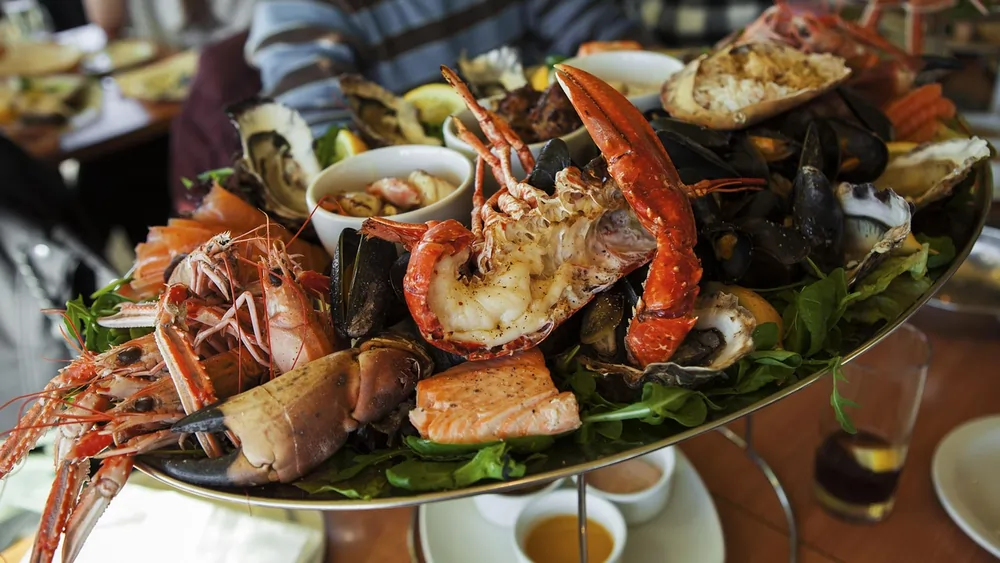
The southern coastline puts Galle in a privileged position when it comes to Sri Lankan seafood dishes. The morning catch arrives at Galle Fish Market early, and by lunchtime, it’s in the pan. Ambul thiyal is the dish that defines this stretch of coast. Sour fish curry, made with goraka (a tamarind-like fruit), is slow-cooked until the fish takes on a deeply concentrated, tangy flavour. It’s one of those Sri Lankan foods that travels poorly, which is part of what makes eating it here feel like a genuine privilege.
Prawn curry cooked in coconut milk. Crab thoran. Devilled fish. The southern kitchen works with heat and acidity in proportions that keep food enthusiasts returning to the table long after they planned to stop.
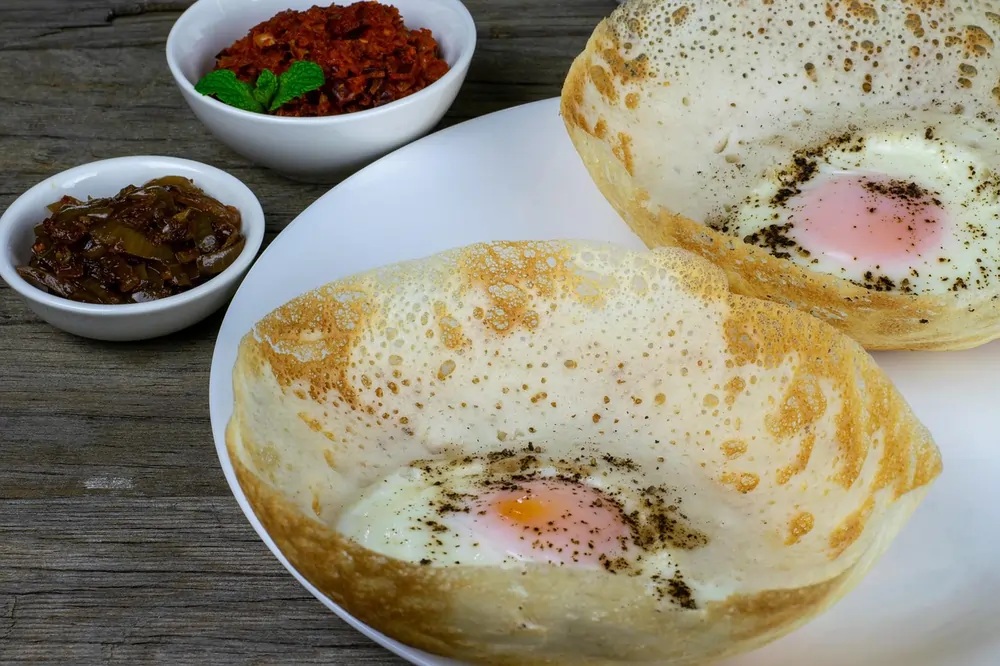
Hoppers at Sunrise
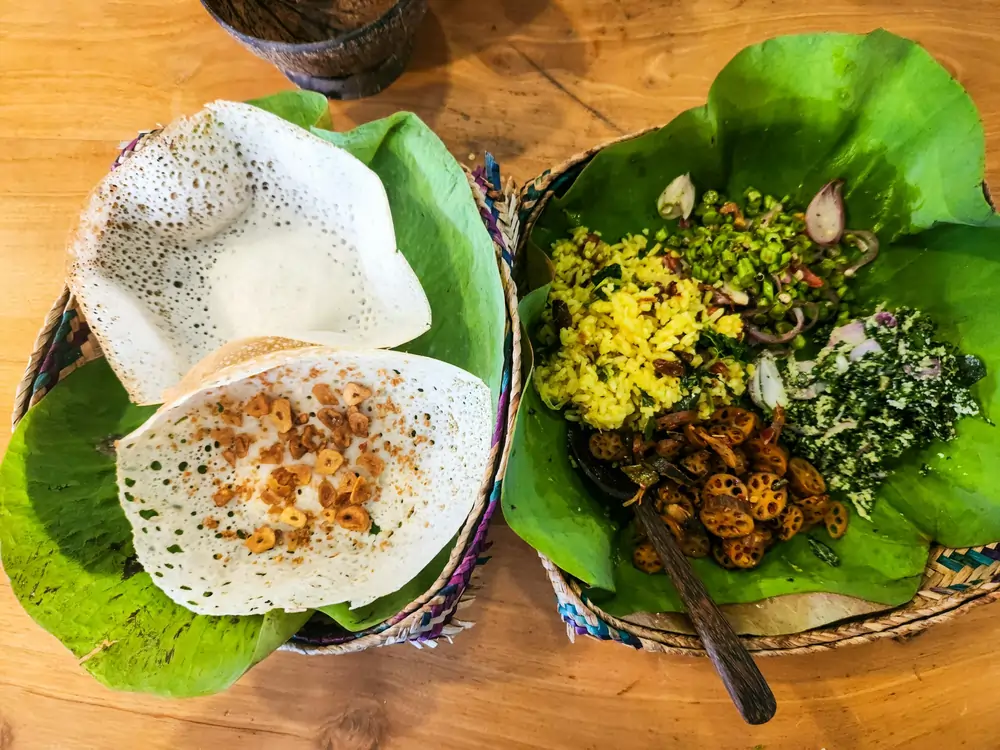
One of the finest mornings a food traveller can have in Sri Lanka involves sitting down to egg hoppers as the light comes off the ocean. A hopper is a bowl-shaped rice flour pancake, crispy at the edges, soft in the middle, cooked in a small wok over direct flame. An egg hopper adds a cracked egg to the centre during cooking. Eaten with pol sambol and a thin dhal, it is the kind of breakfast that reorients your whole relationship with the morning meal.
Galle has several family-run spots that serve hoppers from about 6 am. Your private guide will know exactly where to take you, and frankly, this is a meal worth waking up early for.
3. Kandy: Sri Lankan Foods from the Hill Country Kitchen
Kandy sits at around 500 metres above sea level in the central highlands, surrounded by spice gardens and tea estates. The altitude shapes the food. Here, Sri Lankan culinary traditions lean into root vegetables, jackfruit, and the kind of warming spices that make complete sense at the end of a cool evening.
Food enthusiasts who arrive expecting the same heat and coconut profile as the coast often find Kandy’s kitchen to be a revelation. The cooking is more restrained in some ways, more complex in others.
The Vegetarian Tradition
Sri Lanka has a deep vegetarian cooking tradition, and Kandy is probably the best city on the island to explore it. Jackfruit curry, made with unripe green jackfruit slow-cooked in spices and coconut milk, has the texture of pulled meat without the meat. It sounds like the sort of thing that requires explanation to justify. It doesn’t. Once it’s in front of you, it justifies itself entirely.
Also look for gotukola sambol (centella leaf salad), breadfruit curry, and murunga (moringa drumstick) dishes. These Sri Lankan foods reflect the agricultural abundance of the highlands and are prepared with a confidence that comes from centuries of practice.
The Kandy Sweet Tradition
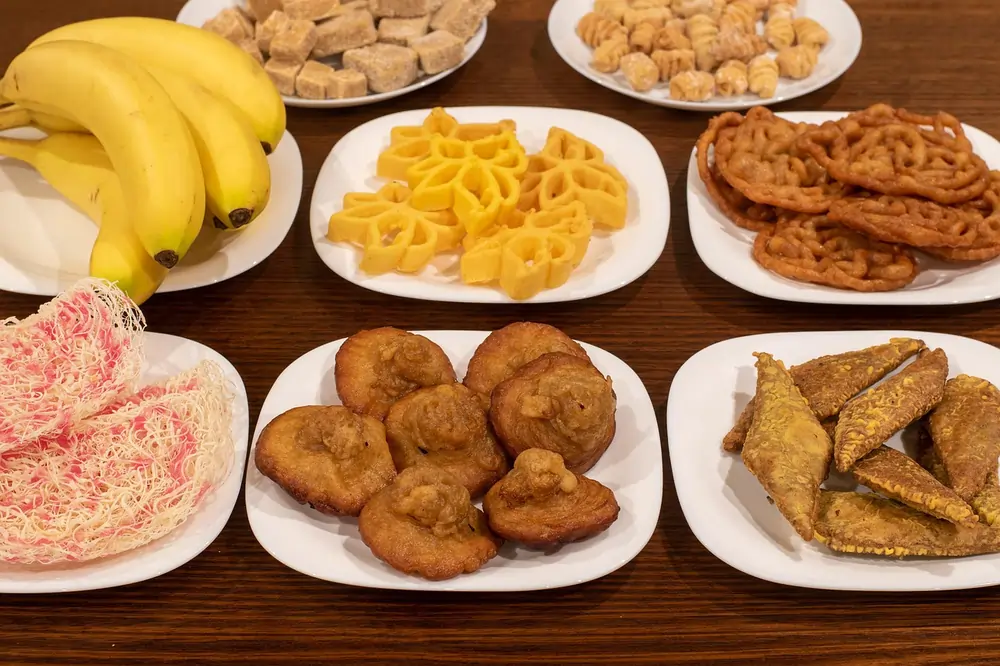
Kavum (deep-fried rice flour and treacle cakes) and kokis (crispy Dutch-influenced fried cookies) are the sweets most associated with Kandy’s festival culture, particularly around Sinhala New Year and the Kandy Esala Perahera. For food enthusiasts, tracking down a traditional sweet stall near the Kandy Market is an experience in sensory overload. The colours, the smells, the sheer variety packed onto one small counter.
4. Jaffna: The Most Distinctive Sri Lankan Foods You Have Never Heard Of
Jaffna is in the north. It is culturally, linguistically, and culinarily unlike anywhere else on the island. The cooking is Tamil in heritage, and it is intense. The spice levels are genuinely confrontational if you haven’t calibrated your palate in the south first. For adventurous food enthusiasts, it is probably the single most exciting culinary stop in Sri Lanka.
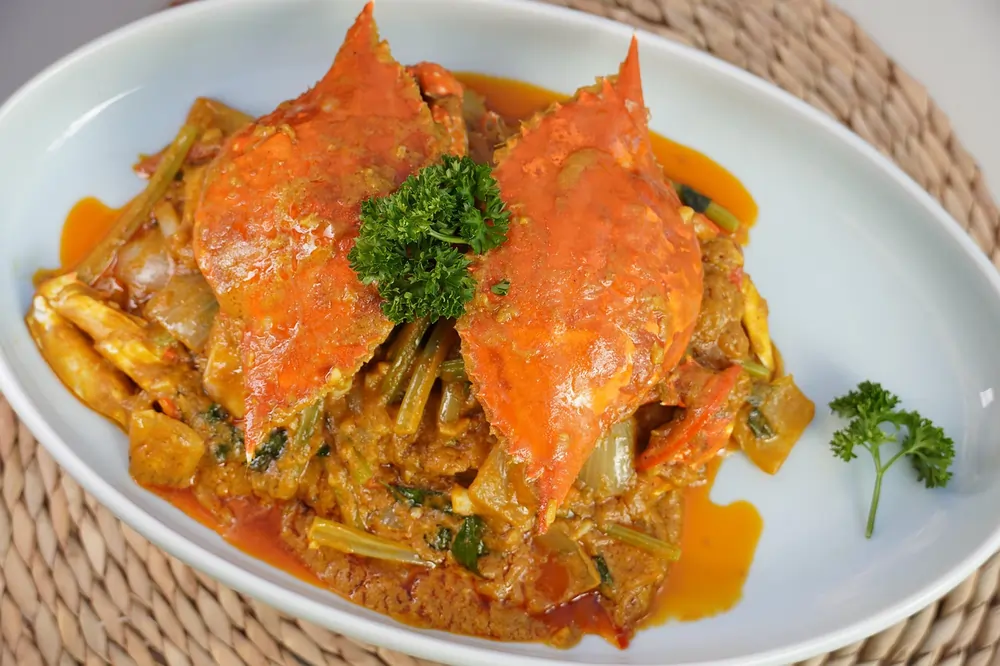
Jaffna Crab Curry: The Dish That Defines a City
If you only eat one thing in Jaffna, it must be the crab curry. Sri Lankan foods don’t get more aggressively flavoured than this. Whole crabs cooked in a deep-red curry base built on freshly ground Jaffna spices, most notably the famous Jaffna curry powder, which has a higher proportion of roasted spices than blends from other parts of the island. The heat is immediate. The flavour is extraordinary. You will eat with your hands; there is no other way to do it properly, and you will very probably order a second crab.
Pittu, Idiyappam, and the Morning Ritual
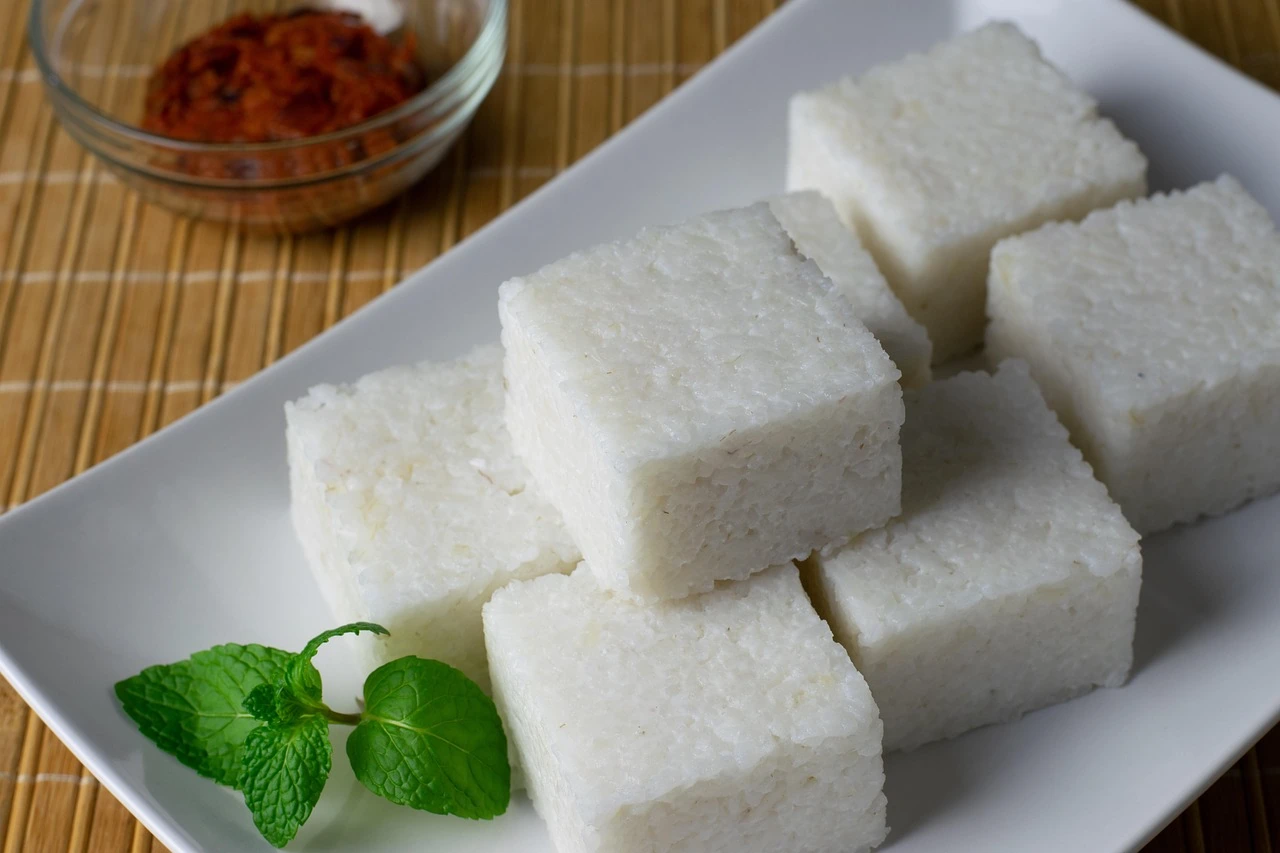
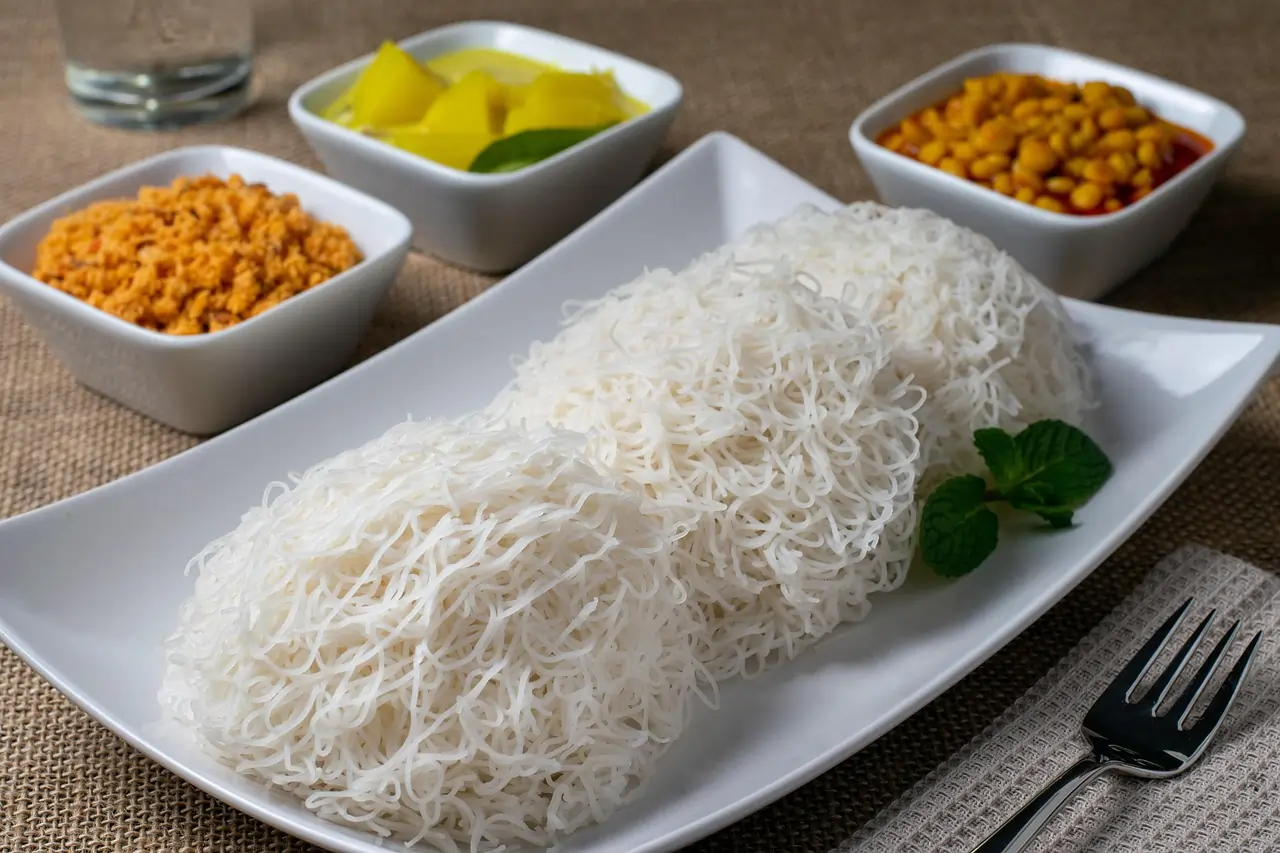
Jaffna’s breakfast culture is its own world. Pittu is a cylindrical steamed cake made from layers of rice flour and grated coconut. Idiyappam is string hoppers: fine rice noodles pressed into delicate tangles and steamed. Both are eaten with coconut milk, thin curries, or simply with a banana. For food enthusiasts who approach travel as a form of cultural education, mornings in Jaffna are extraordinary. The city moves slowly over breakfast, and the food is worth every unhurried minute.
Worth noting: Jaffna isn’t a simple destination to navigate independently. Roads and infrastructure in the far north have improved significantly in recent years, but the local knowledge a private guide brings here is particularly valuable. Knowing which restaurant just got in the freshest mud crabs is not information available on a generic travel app.
5. Negombo: Sri Lankan Foods at the Water’s Edge
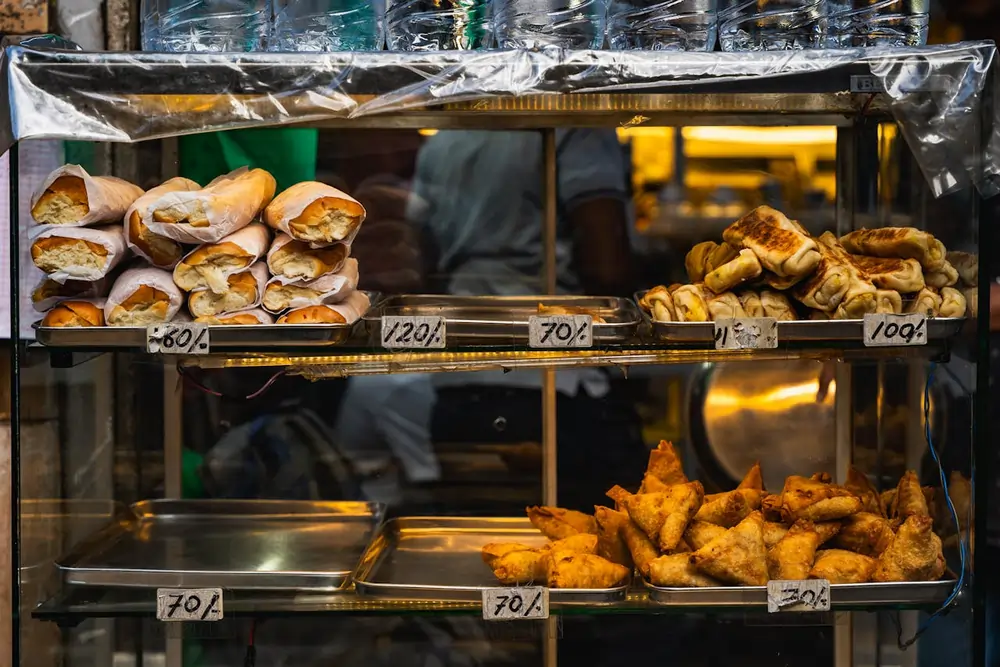
Most Australian travellers arrive at Bandaranaike International Airport and push straight through Negombo on the way to somewhere else. This is understandable. But food enthusiasts should consider building in at least a day here, because Negombo’s fishing heritage has produced a Sri Lankan seafood tradition that is genuinely in a class of its own.
The Fish Market and What Follows
Negombo’s lagoon-side fish market is one of the most active on the island. Arrive early enough, and you’ll watch the overnight boats come in, the sorting happening on the dock, and the first buyers making deals before the sun has fully risen. The fish that ends up on Negombo restaurant tables that evening is still alive when those deals are made.
Sri Lankan foods made from this catch, particularly the grilled seer fish (wahoo), the prawn curries, and the cuttlefish devilled dishes, have a freshness that feels almost unfair to everything you’ve ever eaten from a supermarket. For food enthusiasts who’ve done the south coast already, Negombo offers a different register of the same seafood excellence.
Dutch Canal Fish Lunch
There are a handful of restaurants set directly on the old Dutch Canal that connects Negombo to Colombo. Eating fresh Sri Lankan fish curry while watching canal boats drift past is a very particular kind of contentment. It’s the kind of lunch you extend well beyond what was planned.
6. Ella: Sri Lankan Foods in the Tea Country, Served with Views Worth Every Rupee
Ella has become one of Sri Lanka’s most internationally recognised destinations over the past decade, and food enthusiasts will understand why the moment they sit down to a meal with a mountain valley framing the window behind it. The elevation here gives you cool air and a landscape of staggering beauty. The food, though, is what keeps people from getting up and moving on.
Tea Estate Breakfasts and the Philosophy of Slow
There is a particular quality to breakfast at a tea estate bungalow that you simply cannot replicate in any city. The tea is picked within a kilometre of where you’re sitting. The milk is local. The string hoppers are made by hand each morning, and the pol sambol was prepared before dawn. Sri Lankan foods eaten at altitude, in silence, surrounded by mist-covered hills, is one of the most quietly transformative travel experiences available to Australians heading to Asia.
The Village Restaurant Scene
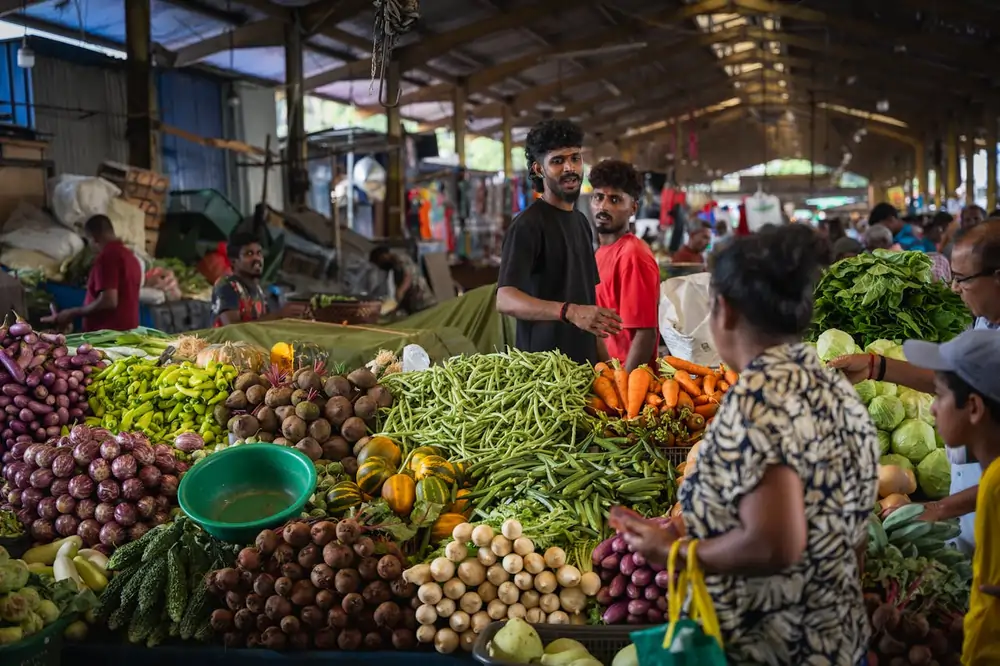
The main strip in Ella is small and, these days, fairly well served with restaurants catering to international visitors. But the better eating, as always in Sri Lanka, happens slightly off the obvious path. The Lankan rice and curry lunches served from small family kitchens on the roads above the town tend to be fresher, cheaper, and more representative of actual Ella cooking than anything found beside the tourist trail.
Food enthusiasts should also look for wattalapam on Ella dessert menus. It’s a coconut jaggery custard with a Malay-influenced history that found its permanent home in Sri Lanka. Dense, sweet, faintly spiced with cardamom and nutmeg. It’s the kind of dessert that ends meals well.
The Train Ride That Precedes the Meal
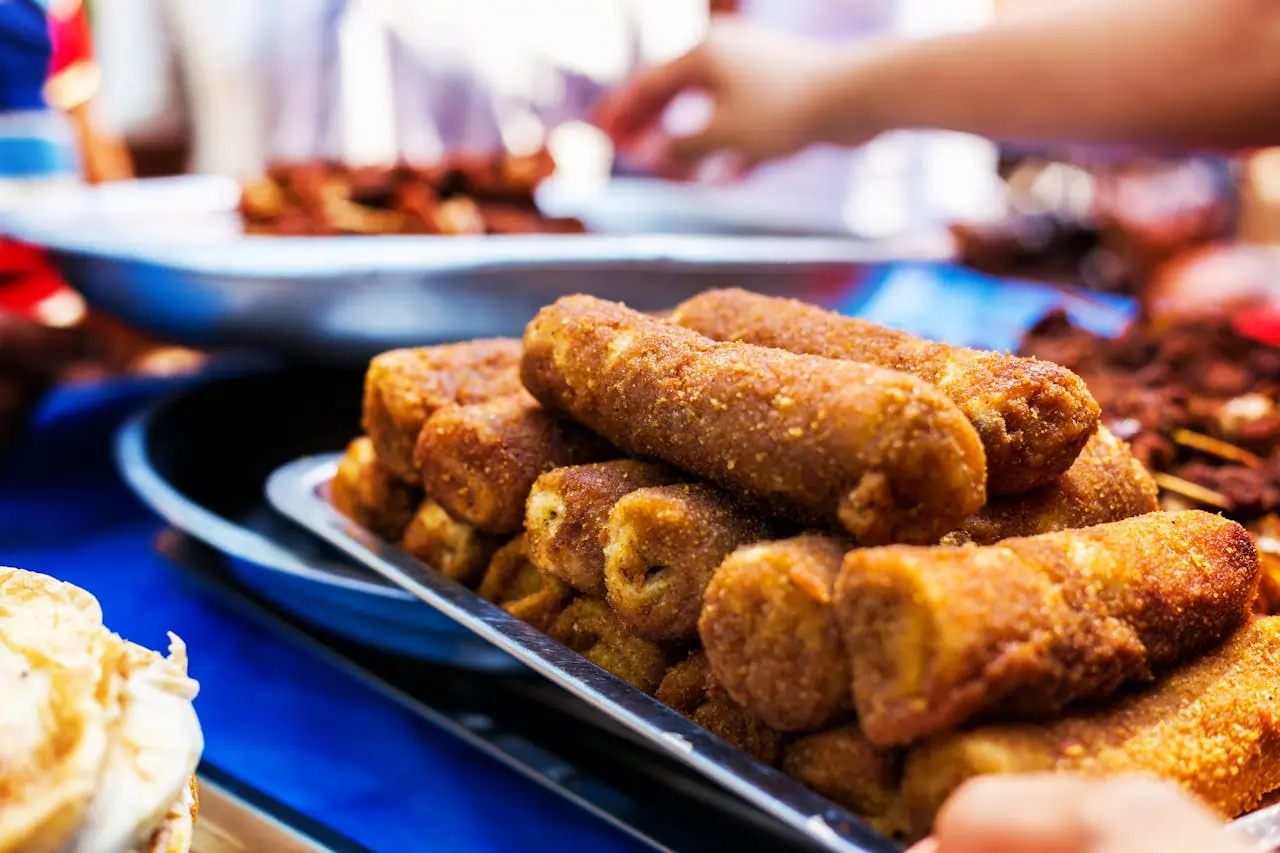
Getting to Ella by train from Kandy is genuinely one of the world’s great rail journeys. The landscape shifts from hill country into cloud forest. Waterfalls appear and disappear through carriage windows. And the food vendors who board at various stations, carrying trays of vadai (lentil fritters), peanuts, and short eats, are worth the price of the ticket on their own. Sri Lankan foods experienced on that train have a context that no restaurant can manufacture.
What Every Food Enthusiast Should Know Before Eating Across Sri Lanka
A few notes that experienced travellers and seasoned food enthusiasts will appreciate before they plan their plates.
The Spice Reality
Sri Lankan foods are, in general, spicier than the Sri Lankan dishes you’ll find in Australian restaurants. This isn’t a complaint; it’s a calibration. Start slower and build up. By the third or fourth day, your tolerance adjusts, and meals that would have floored you on arrival feel entirely manageable.
The heat is also more complex than it first appears: it’s not just chilli, but a layered mix of black pepper, green pepper, curry leaf, and pandan that creates something with more depth than simple fire.
Eating Where Locals Eat
The best Sri Lankan foods are rarely found at the most visible locations near tourist sites. A private guide with genuine local knowledge is not a luxury here; it’s the difference between eating a mediocre approximation of Sri Lankan cuisine and eating the real thing. This is particularly true in Jaffna and Kandy, where the best cooking is family-run, unadvertised, and found through relationships rather than search results.
Seasonal and Regional Availability
Sri Lankan cuisine is deeply seasonal and regional. Certain fish are available only at specific times of year. Jackfruit ripens in a particular season. Mangoes, rambutan, and woodapple each have their moments. Food enthusiasts who choose their travel dates carefully can align their trip with peak seasons for specific ingredients. This is worth asking about when you’re planning your itinerary with a specialist who knows the island.
Start Planning Your Sri Lanka Food Tour with Sesatha Travel
Sri Lankan foods are the kind of thing that changes how you think about eating. The complexity of a single rice and curry lunch, the intensity of a Jaffna crab, the impossible freshness of a southern coast ambul thiyal, the intimacy of breakfast hoppers eaten before the heat arrives, these are experiences that stay with you in the way that truly great travel always does.
For Australian food enthusiasts who want to see this island properly, the six cities in this guide offer a complete picture of one of the world’s most underrated culinary destinations. You don’t need to choose between them. A well-designed private itinerary covers all of it without the compromises a group tour demands.
Sesatha Travel is an Australian travel agency and tour operator dedicated to private, tailor-made experiences in Sri Lanka. We’ve built itineraries for travellers who care deeply about food, culture, wildlife, and genuine discovery. If you’re ready to eat your way across the most flavourful island in Asia, we’d love to help you plan it.