



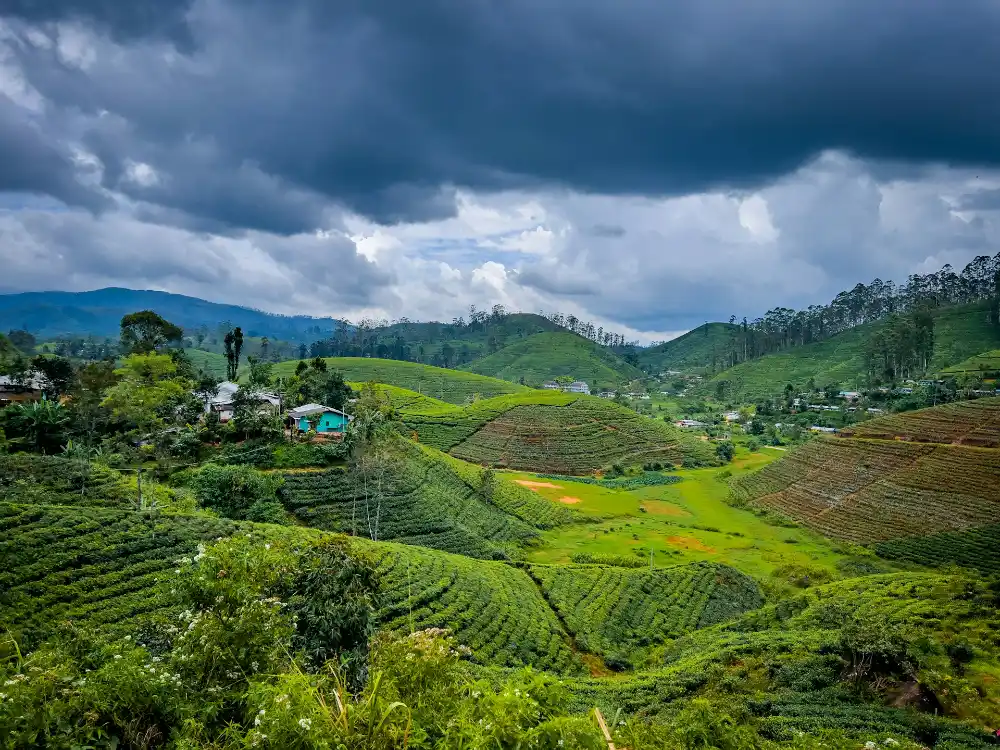
Understanding the Rainy Season in Sri Lanka
Sri Lanka sits just north of the equator, so it stays warm all year. Temperatures on the coast hover around the high twenties to low thirties no matter the month. What changes is the rain, and two seasonal wind systems decide where it falls.
Think of the island as having a wet side and a dry side that swap places twice a year. The central mountains act like a wall. Clouds blowing in from one direction dump their rain on the near slopes and the coast below, while the far side stays relatively dry. That simple bit of geography is why the rainy season in Sri Lanka is so much easier to work around than it sounds.
The Southwest Sri Lanka Monsoon (May to September)
Locals call it the Yala monsoon. Moist winds off the Indian Ocean push into the west coast, the south coast and the central hills. Colombo, Bentota, Hikkaduwa, Galle, Mirissa, Nuwara Eliya and Ella collect the bulk of the rain. May and June are usually the heaviest months, and things often ease off from July.
The rain rarely sets in all day, though. More often you’ll get a heavy burst in the afternoon or overnight, followed by sunshine and steam rising off the road. Seas on the south coast do get rough, and many beaches fly red flags for swimming.
The Northeast Sri Lanka Monsoon (November to February)
This is the Maha monsoon, and it flips the pattern. Winds from the Bay of Bengal bring rain to Jaffna, Trincomalee, Pasikudah and Arugam Bay. It tends to be gentler than its southwest cousin, although November and December can still deliver some very wet days on the east coast. Meanwhile, the south and west coasts enjoy their best beach weather of the year.
The Inter-Monsoon Months
Between the two monsoons come the transition periods, roughly March to April and October to November. During these weeks, thunderstorms can roll across the whole island, usually in the afternoon. October and November are often the wettest stretch of the rainy season in Sri Lanka as a whole. Mornings tend to be clear, so an early start makes a big difference. The Department of Meteorology of Sri Lanka publishes regional forecasts if you like to keep an eye on things before you fly.
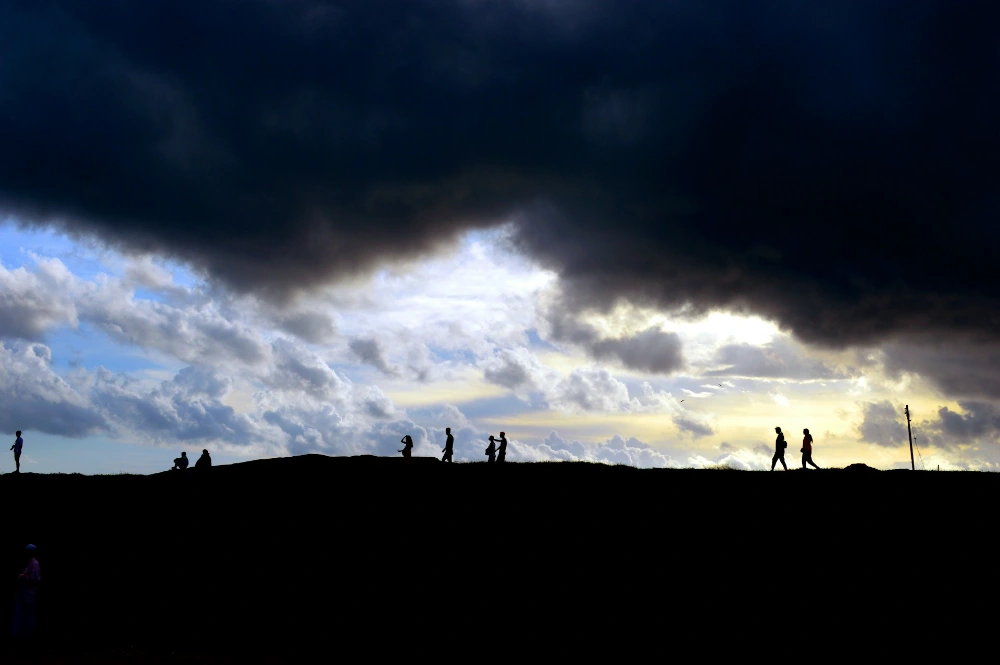
Why Travel During the Rainy Season in Sri Lanka?
Plenty of our clients now choose the wet months on purpose. Once you know how the Sri Lanka monsoon moves around the island, the advantages start to stack up quickly.
Lower Prices and Better Room Availability
Boutique hotels and beach villas on the south coast often drop their rates noticeably between May and September. Luxury properties in the hill country do the same. That means the stay you’d struggle to book in February is often available, and sometimes cheaper, during the rainy season in Sri Lanka. It’s a great time to upgrade to the room with the view.
Fewer Crowds at the Big-Name Sites
Sigiriya at 7am in January can feel like a queue at the footy. During the rainy season in Sri Lanka, it’s a different story. You’ll still share the rock, but you won’t be shuffling up the stairs single file. The same goes for the Temple of the Tooth in Kandy and the famous Ella train, where tickets are far easier to grab.
The Island at Its Greenest
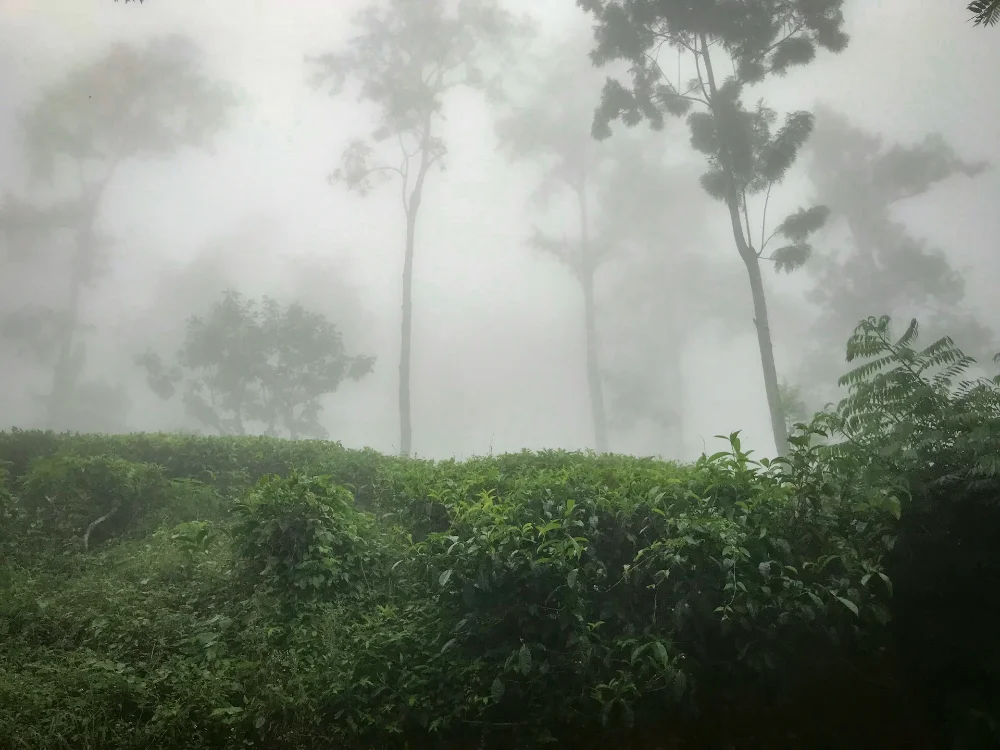
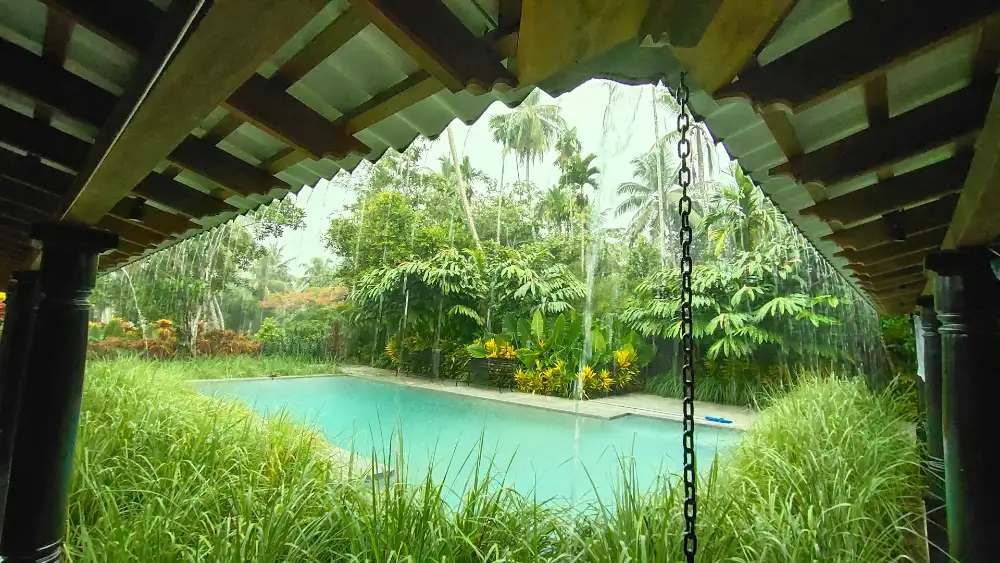
There’s a reason photographers love the rainy season in Sri Lanka. Rice paddies shine, waterfalls like Ravana Falls and Diyaluma run at full power, and the tea slopes around Haputale look freshly painted. Mist drifting through the hills at dawn is the kind of thing you remember for years.
Festivals Worth Planning Around
Kandy’s Esala Perahera usually falls in July or August, right in the middle of the southwest Sri Lanka monsoon. Ten nights of drummers, dancers, and decorated elephants parade through the streets, and it’s one of the great festivals of Asia. Rooms in Kandy book out months ahead, so lock in your dates early if this is on your list.
Where to Go During the Rainy Season in Sri Lanka
This is where planning pays off. A route that follows the dry side of the island turns a so-called off-season into one of the best times to visit. Here’s where we send clients depending on the month.
East Coast Beaches (May to September)
When the southwest Sri Lanka monsoon is soaking Galle, the east coast is in its prime. Arugam Bay is the surf capital, with long right-hand point breaks that draw Aussie surfers every winter. Further north, Trincomalee and Nilaveli offer calm, clear water for swimming and snorkelling, and boat trips out to Pigeon Island. Pasikudah has one of the shallowest, gentlest bays in the country, which families love.
Whale watching off Trincomalee also runs through this window, with blue whales and spinner dolphins seen offshore in good years. If a beach holiday is non-negotiable during the rainy season in Sri Lanka, the east coast is your answer.
The Cultural Triangle
Sigiriya, Dambulla, Polonnaruwa and Anuradhapura sit in the island’s dry zone. They get some rain, but far less than the southwest, which makes the Cultural Triangle a reliable anchor for any itinerary during the rainy season in Sri Lanka from May to September.
Between roughly July and September, elephants gather in their hundreds around the reservoir at Minneriya National Park, an event known locally as “The Gathering”. It’s one of the biggest elephant congregations in Asia and a highlight of any monsoon tour. Our Sri Lanka heritage tour guide goes deeper into the ancient cities if history is your thing.
The Hill Country in the Green Season
Should you skip Ella and Nuwara Eliya during the rainy season in Sri Lanka? Not at all. You’ll want a waterproof jacket and a bit of patience, but the payoff is huge. Rain tends to arrive in the afternoon, so mornings are made for tea factory visits, the Little Adam’s Peak walk, and that famous train ride across the Nine Arch Bridge. Book the morning train for the clearest views.
Horton Plains can be misty, and World’s End sometimes disappears into cloud. Go early, keep your expectations relaxed, and enjoy the drama of the weather rolling through. Haputale and Bandarawela, on the eastern edge of the hills, often stay a little drier than Nuwara Eliya.
South and West Coasts (December to April)
Once the northeast Sri Lanka monsoon arrives, the beaches flip. Mirissa, Weligama, Tangalle, Unawatuna and the walled town of Galle Fort hit their stride from December through April. Seas calm down, whale watching shifts to Mirissa, and the south coast is at its most relaxed. If you’re travelling over the Aussie summer holidays, this is the coastline to aim for.
Jaffna and the North (May to September)
Jaffna is at its driest during the southwest Sri Lanka monsoon, making the middle of the year a great time to explore its Hindu temples, Dutch fort, and island-hopping trips to Delft. Very few Australians make it this far north, so it adds a fresh chapter to a repeat visit.
A Sample 12-Day Monsoon Tour for the Rainy Season in Sri Lanka
Here’s a route we’ve refined over many trips for travellers arriving between June and September. It dodges the wettest regions, keeps drive times sensible, and still covers the island’s biggest highlights.
- Day 1: Land in Colombo, meet your private driver, and head to a relaxed hotel near Negombo, or go straight inland if your flight arrives early.
- Days 2 to 4: Sigiriya and Dambulla. Climb the rock fortress at sunrise, explore the cave temples, and spend an afternoon on a jeep safari at Minneriya or Kaudulla to see the elephant gathering.
- Day 5: Polonnaruwa by bicycle in the morning, then a slow afternoon by the pool.
- Days 6 and 7: Kandy. Visit the Temple of the Tooth, wander the Royal Botanical Gardens at Peradeniya and, if your dates line up, watch the Esala Perahera.
- Days 8 and 9: Train from Kandy or Nanu Oya into the hills, then two nights in Ella. Walk Little Adam’s Peak early and leave afternoons for tea, books and the odd downpour.
- Days 10 to 12: Drive east to Arugam Bay or north to Pasikudah for three nights of beach time, surf lessons and fresh seafood before transferring back to Colombo for your flight home.
Travelling between December and March instead? Simply reverse the beach leg. Swap Arugam Bay for Mirissa, Tangalle or Galle Fort and add a safari in Yala or Udawalawe. That’s the beauty of planning around the Sri Lanka monsoon rather than against it.
Experiences That Shine in the Rainy Season in Sri Lanka
Some of the island’s best experiences are actually better when the clouds roll in. Here are a few we love to weave into a wet-season itinerary.
Rainforest Walks and Wildlife
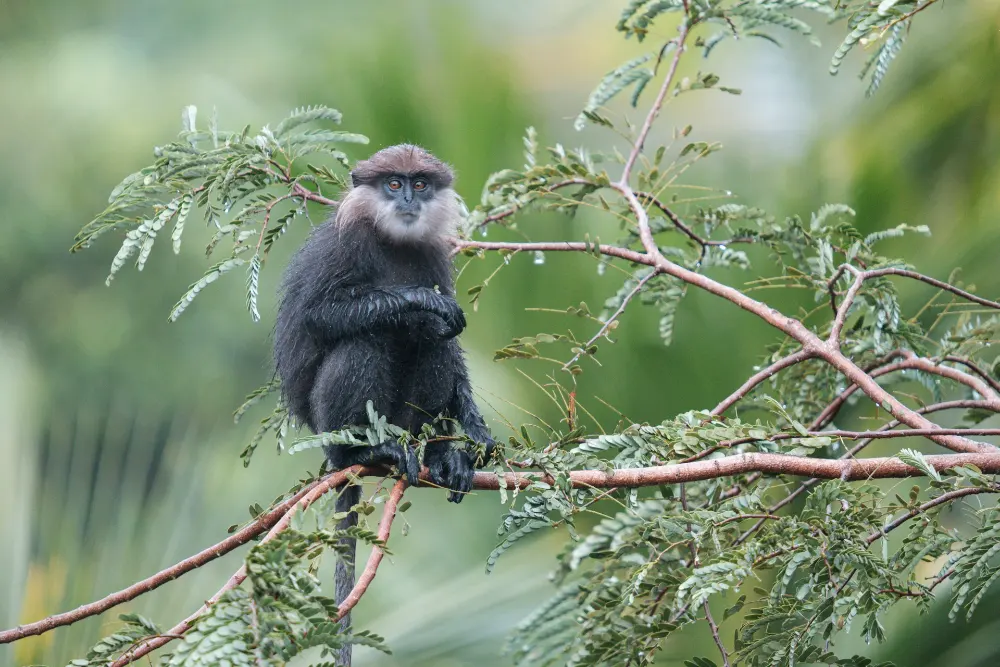
Sinharaja Forest Reserve, a UNESCO World Heritage rainforest, comes alive during the rainy season in Sri Lanka. Endemic birds, purple-faced langurs and tiny tree frogs are easier to spot, and the canopy drips with colour. Go with a local naturalist and pack those leech socks.
Ayurveda, Cooking Classes and Slow Days
A stormy afternoon is the perfect excuse for an Ayurvedic massage or a hands-on cooking class with a local family. Learning to make a proper coconut sambol while rain drums on a tin roof is a memory that sticks. Many of our clients say these slow, unplanned moments were their favourite part of the rainy season in Sri Lanka, and they’re easy to slot in wherever the forecast turns.
Whale Watching on the Dry Side
Whale season moves with the monsoons. Trincomalee is the place for whale watching in the middle of the year, while Mirissa takes over from roughly December to April. Morning boat trips give you the calmest water and the best chance of a sighting.
Planning Your Sri Lanka Monsoon Trip from Australia
A little forward thinking goes a long way during the wet months. These are the questions Aussie travellers ask us most.
Flights and Timing for Australian Travellers
The June and July school holidays fall right in the middle of the rainy season in Sri Lanka, as do the September and October spring holidays. That’s good news if you follow the east coast route above. Most capital cities have one-stop connections to Colombo via hubs such as Singapore and Kuala Lumpur, and Perth travellers enjoy the shortest journey time of all. Book flights early for school holiday periods, as fares climb quickly.
If you’re searching for a “Sri Lanka travel agent near me”, the closest office matters less than you’d think. What counts is a specialist who knows the island in detail, picks up the phone in Australian business hours, and can reroute your trip if the weather shifts. That’s what makes a monsoon tour work.
What to Pack for the Rainy Season in Sri Lanka
Pack light, quick-drying, and practical. These are the items our clients thank us for mentioning:
- A lightweight rain jacket or packable poncho
- Quick-dry clothing in breathable fabrics, plus one warm layer for the hill country
- Sandals or shoes that can get wet, plus closed shoes for hikes
- A dry bag or zip-lock pouches for phones and passports
- Insect repellent, as mosquitoes are more active after rain
- Leech socks if you plan to hike in Sinharaja or Knuckles
- Modest clothing that covers shoulders and knees for temple visits
Safety, Insurance and Road Conditions
Heavy rain can occasionally cause flooding in low-lying areas or landslides on hill country roads. A good driver keeps an eye on local news and adjusts the day’s route as needed, which is one of the biggest advantages of a private tour during the rainy season in Sri Lanka. Check the latest advice on Smartraveller before you go, and make sure your travel insurance covers weather-related delays and changes.
Getting Around When It Rains
Trains are atmospheric during the rainy season in Sri Lanka but can run late after storms. Domestic roads are slower in the wet, so we build buffer time between stops rather than packing in long drive days. A private vehicle also means you can pause for a waterfall that’s suddenly roaring or wait out a downpour over a cup of Ceylon tea at a roadside café. Nobody minds a rain delay when the view looks like that.
What It Costs: Rainy Season in Sri Lanka vs Peak Season
Accommodation is where the rainy season in Sri Lanka really pays off. Prices vary with hotel choice and group size, but here’s a realistic picture for a couple, based on recent trips we’ve planned:
- Boutique and luxury hotels: often 20 to 40 percent cheaper on the south and west coasts between May and September compared with the December to March peak.
- Private car and driver: roughly AUD 90 to AUD 150 per day, with little seasonal change.
- Mid-range 12-day private tour: typically around AUD 2,800 to AUD 4,200 per person twin share during the rainy season in Sri Lanka, excluding international flights.
- Luxury 12-day private tour: often AUD 5,500 per person and up, depending on villas and experiences.
The official Sri Lanka Tourism website lists current festivals and events, which can affect pricing in places like Kandy. Our Sri Lanka holiday packages reflect sample itineraries with up-to-date AUD pricing.
Common Mistakes on a Monsoon Tour
We’ve rescued a fair few DIY itineraries over the years. These are the slip-ups we see most during the rainy season in Sri Lanka:
- Booking a south coast beach week in June. It’s not unworkable, but rough seas and red flags often make swimming tricky. Head east instead.
- Treating the whole island as one forecast. A weather app showing rain for “Sri Lanka” tells you very little. Check by region.
- Over-scheduling. Long drive days leave no room for weather. Build in breathing space.
- Skipping the hill country entirely. The green season is when the tea estates look their best. Just plan your outdoor time for mornings.
- Leaving Kandy accommodation too late. During Perahera, rooms vanish months ahead.
How Sesatha Travel Plans a Monsoon Tour Around the Weather
Every trip we design starts with your travel dates, then works backwards from where the weather will be kindest. For a winter getaway, that usually means a private Sri Lanka tour built around the Cultural Triangle, the hills and the east coast. For honeymooners, we’ll pair secluded villas with dry-side beaches on our Sri Lanka honeymoon packages. Families often lean towards our family holiday packages, with shorter drive days and pool time built in.
If you’d rather start from scratch, our bespoke Sri Lanka tours let you choose the pace, the hotels and the experiences. Travellers wanting something a little more indulgent can browse our luxury Sri Lanka tours. Whichever style you choose, your driver and itinerary stay flexible, so a stormy afternoon simply becomes a spa session, a cooking class or a long lunch somewhere lovely. That flexibility is why a private monsoon tour works so well during the rainy season in Sri Lanka.
Summary
The rainy season in Sri Lanka isn’t something to avoid. It’s something to plan around. Two monsoons, two coastlines and a mountainous middle mean there’s almost always a sunny corner of the island waiting for you. Follow the dry side during the rainy season in Sri Lanka, and you’ll trade the crowds for quiet temples, lower prices, roaring waterfalls and tea country at its lushest.
Whether you’re escaping a Melbourne winter in July or chasing south coast sunshine in January, the right route makes all the difference. That’s where we come in. We know how each Sri Lanka monsoon behaves, which roads slow down after heavy rain, and which beaches are glowing while others are grey. We’ll build your trip around the weather, your interests, and your budget.
Start planning your Sri Lanka tour today. Talk to an expert at Sesatha Travel or request your free custom itinerary online. Your perfect monsoon tour is only a conversation away.